A transistor is a semiconductor device that works as a switch or an amplifier in a circuit. There are two main bipolar types, NPN and PNP. Field-effect transistors (FETs and MOSFETs) and insulated-gate bipolar transistors (IGBTs) are also widely used in power circuits.
Transistors usually fail by electrical overstress (EOS), which can leave the terminals shorted or the junction open. Other causes include electrostatic discharge (ESD), overheating, moisture entering through a defect in the passivation layer, contamination, and mechanical damage to the die or the package. The result is often a short, an open, or a leakage current that is too high.
The case studies in this category include power MOSFETs with all terminals shorted and an IGBT that could not hold its rated voltage because of a passivation defect. Others cover a JFET and optocouplers.
The lab starts with electrical tests and curve tracing to find the failure mode. We then decapsulate the part and inspect the die with optical microscopy. Scanning electron microscopy and X-ray radiography give more detail when needed.
If you have failed transistors, request a quote.
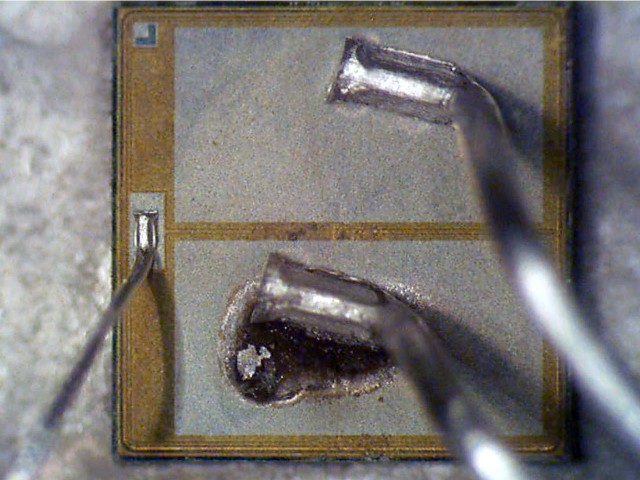
Fairchild RFP40N10 power MOSFETs
Gideon Analytical Laboratories receivedthree Fairchild RFP40N10 power MOSFETs. A MOSFET is a specific type of metal oxide semiconductor …
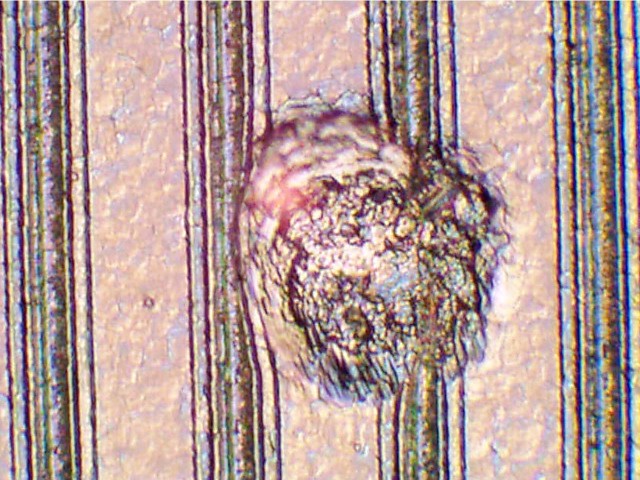
January 26, 2018Toshiba GT40T301S IGBT Failures on PCBs
Gideon Analytical Laboratories received two Printed Circuit Boards (PCBs) with failed Insulated-gate bipolar transistors (IGBTs). The IGBTs …
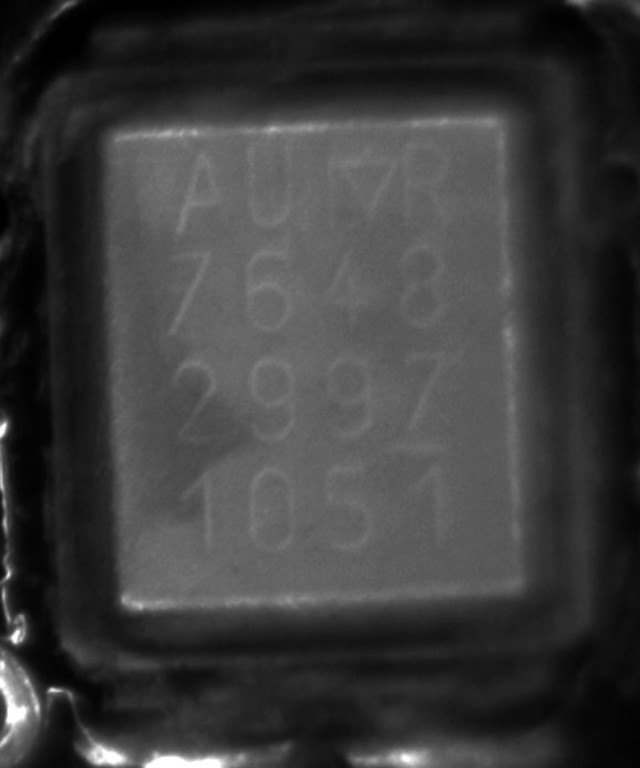
April 3, 2017IR AUIRF7648M2 Power MOSFET
Gideon Analytical Laboratories received two failed AUIRF7648M2 MOSFETs. These are rather new on the market and specifically designed for the …
October 24, 2014N-channel JFET 2N4856
Gideon Analytical Laboratories received several failed N-channel JFET 2N4856 parts. Several good N-channel JFET 2N4856 parts were also …
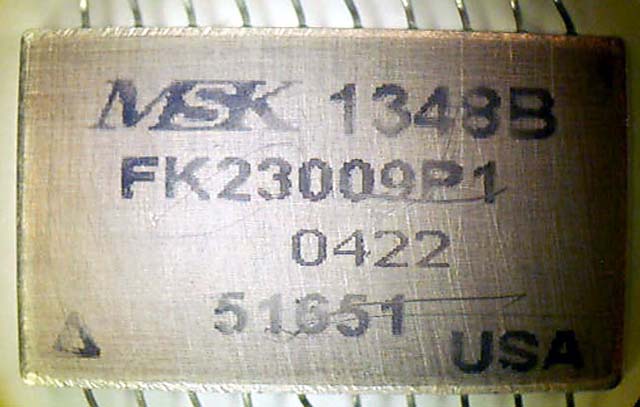
October 23, 2014Linear Microcircuit Modular Hybrid
Gideon Analytical Laboratories received one linear microcircuit modular hybrid FK23009 for electronic failure analysis. A hybrid integrated …
April 10, 2014Fairchild 740L6000 Internal Contamination
Gideon Analytical Laboratories received four Fairchild 74OL6000 field failed Optocouplers along with three good (virgin green dot) devices …
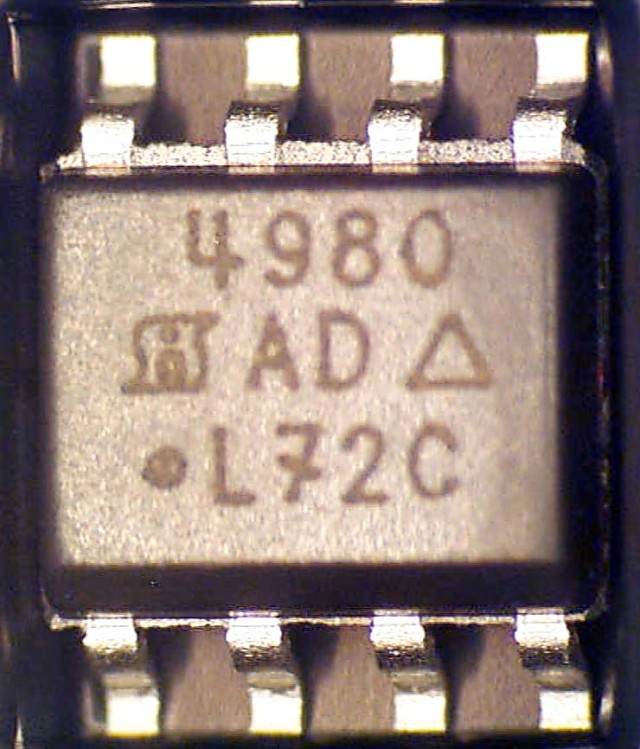
July 1, 2013Siliconix Si4998DY MOSFET
Gideon Analytical Laboratories received several dual N-channel SO-9 Vishay Siliconix MOSFETs. MOSFETs are transistors used for amplifying or …
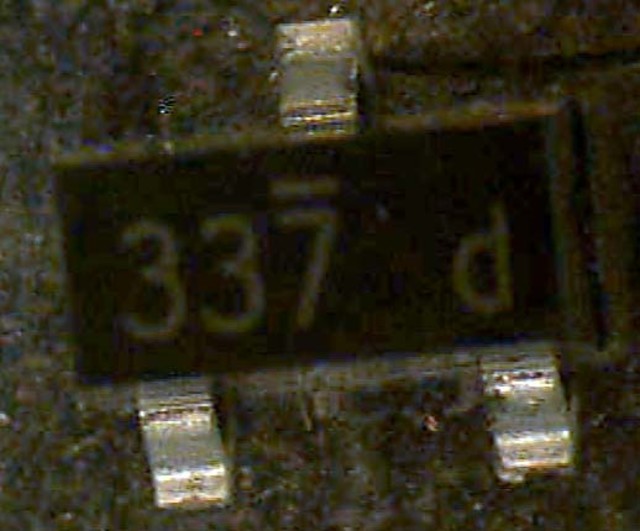
April 2, 2013Failure Analysis of EDN337N FET
Gideon Analytical labs received one FDN337N-channel FET for failure analysis. The Drain-Source was reported shorted. Super SOTTM-3 N-Channel …
December 1, 2012Photocoupler Avago HCPL 0630 Failure Analysis
Gideon Analytical Laboratories received one failed photocoupler, an Avago HCPL 0630 in an 8 pin DIP SOIC -8 package. The reported failure …
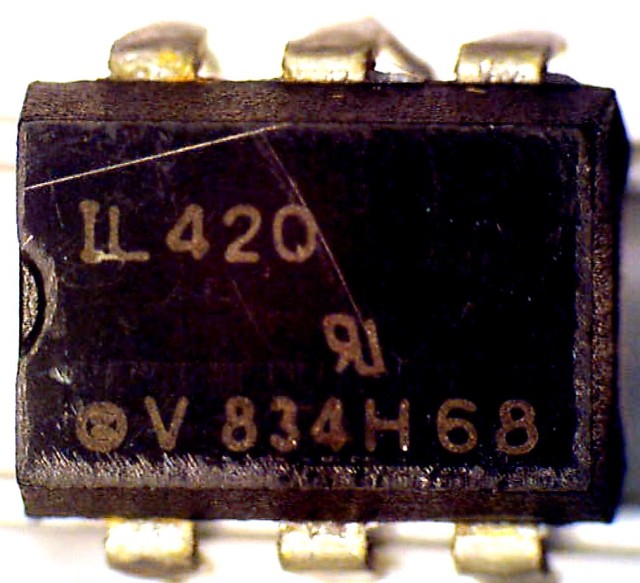
November 27, 2012Photocoupler Vishay IL420 Failure Analysis
Gideon Analytical Laboratories received one failed photocoupler, a Vishay IL 420, for failure analysis along with two virgins (unused) …
November 27, 2012Fairchild RFP40N10 MOSFET Failure Analysis
Gideon Analytical Laboratories received three-failed Fairchild RFP40N10 power MOSFETs. All the terminals were shorted. A MOSFET is a …
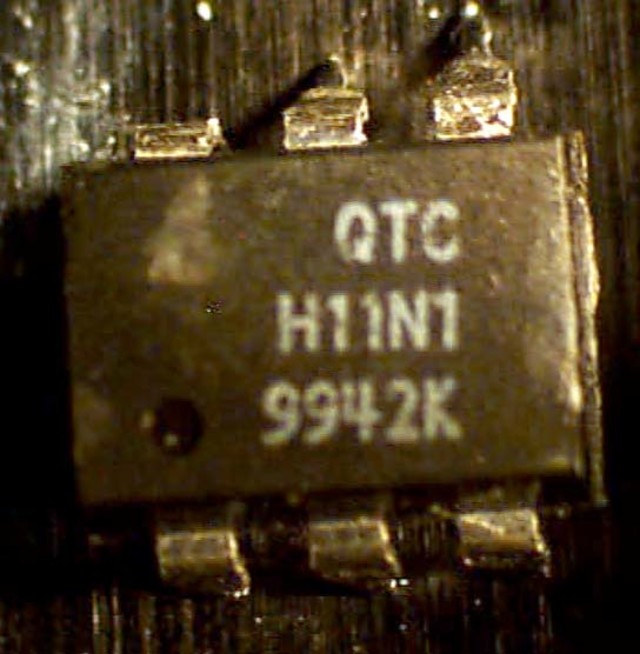
November 26, 2012Optocoupler Fairchild QTC H11N1 Failure Analysis
Gideon Analytical Laboratories received several Fairchild QTC H11N1s, a high-speed logic optocoupler, in 6-pin plastic DIPs. The devices …
November 23, 2012