Failure Analysis

Failure analysis finds out why an electronic part or assembly stopped working. The goal is a root cause that you can use to make a corrective action, for example a change to a design, a process or a supplier.

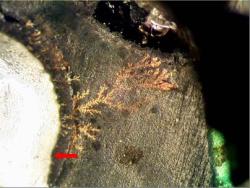
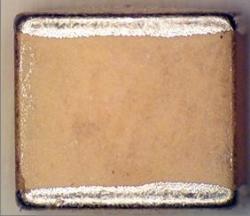
This category collects our case studies on many kinds of electronic parts. They include capacitors, diodes, transistors, integrated circuits, optocouplers and complete printed circuit boards. The common failure causes are electrical overstress (EOS), mechanical stress and cracking, moisture, contamination and process defects. In one case, a short on a board was caused by tin whiskers inside the solder mask. In another, cracks in ceramic capacitors came from PCB flexing.

A typical job starts with a review of the failure history and electrical tests on the failed parts, often compared with good parts. The lab then uses non-destructive methods such as X-ray radiography and C-scanning acoustic microscopy. Destructive steps follow, such as cross-sectioning and decapsulation, with optical and scanning electron microscopy. Chemical methods such as FTIR help to identify contamination.

To start a project, request a quote.

Success Stories

Browning Trail Camera Recon Force Failures

Browning Trail Camera Recon Force Failures

Gideon received several Browning BTC-7-4K-Edge cameras from the field. The cameras were dead on arrival. The objective was to find the cause of failure.

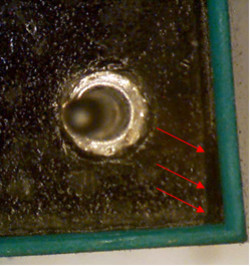
external photo of recon force camera

There was no external physical damage to any cameras

The batteries were replaced with new ones. The camera did not turn on; however, when it was disassembled, the full voltage resided at the solder joints of the printed circuit board.

Failure Analysis of STMicroelectronics STW37N60DM2AG 600V MOSFETs

Failure Analysis of STMicroelectronics STW37N60DM2AG 600V MOSFETs

Gideon received six failed STMicroelectronics STW37N60DM2AG 600V MOSFETs for failure analysis. These high voltage N-channel Power MOSFET are part of the MDmesh™ DM2 fast recovery diode series. They offer a very low recovery charge (Qrr) and time (trr) combined with low RDS(on), rendering it suitable for the most demanding high-efficiency converters and ideal for bridge topologies and ZVS phase-shift converters. These were installed on an H-bridge with assured engineering support that there was no waveform overlapping during the transition. If these signals overlap, the MOSFETs will short circuit the supply, and a shoot-through condition will arise which will effectively cause the rapid discharge of the decoupling capacitors through the MOSFETs on every switching transition, thus dissipating a tremendous amount of heat through the silicon, a short, and a large current pulse.

Failed Cortina WJLXT971ALCA4e3 IC on PCB

Failed Cortina WJLXT971ALCA4e3 IC on PCB

Gideon Analytical Laboratories received 20 failed Cortina WJLXT971ALCA4e3 Ethernet ICs to analyze. Integrated Circuits (ICs) are a set of electronic circuits on one small flat piece (or “chip”) of semiconductor material that is normally silicon. The integration of large numbers of tiny transistors into a small chip results in circuits that are orders of magnitude smaller, faster, and less expensive than those constructed of discrete electronic components. These Cortina WJLXT971ALCA4e3 ICs were suspected to be possibly mislabeled or have some kind of manufacturing defects. The goal was to determine why these Cortina WJLXT971ALCA4e3 Ethernet ICs were failing.

Stackpole 100-ohm Power Resister Failure Analysis

Stackpole 100-ohm Power Resister Failure Analysis

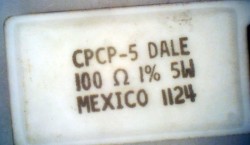
Gideon Analytical Laboratories received three different vendor 100-ohm resistors, made by Vishay, RCD, and Stackpole, respectively. The two Stackpole resistors were open. A resistoris a passive two-terminal electrical component that implements electrical resistance as a circuit element. In electronic circuits, resistors are used to reduce current flow, adjust signal levels, to divide voltages, bias active elements, and terminate transmission lines, among other uses. Our goal was to test the functionality the Vishay, RCD, and Stackpole resistors, and if any were failing, determine the cause of the failure.

T491D475K050AT Kemet Tantalum Capacitor Analysis

T491D475K050AT Kemet Tantalum Capacitor Analysis

Gideon Analytical Laboratories received several T491D475K050AT Kemet tantalum capacitors for electronic failure analysis. A capacitor is a passive two-terminal electronic component that stores electrical energy in an electric field. While some capacitance exists between any two electrical conductors in proximity in a circuit, a capacitor is a component designed to add capacitance to a circuit. The Kemet T491D475K050AT has a capacitance of 4.7 uF, a voltage rating of 50 VDC, and a tolerance of 10%, measures 7.3mm x 4.3mm x 3.1mm (LWH), has a minimum operating temperature of -55 degrees Celsius and a maximum operating temperature of 125 degrees Celsius. One of these capacitors had already been tested and found to be a dead short. The other capacitors were to be used to determine whether acid had affected the forming voltage oxide.

On Semiconductor SS16 Schottky Rectifier

On Semiconductor SS16 Schottky Rectifier

Gideon Analytical Laboratories received two On Semiconductor SS16 rectifier for failure analysis. The On Semiconductor SS16 Schottky Rectifier features glass-passivated junctions and a high-current capacity. Their applications include low voltage, high-frequency inverters, freewheeling, and polarity protection. Their storage temperature range is between -65 and 150 Degrees Celsius and the operating junction temperature is between -65 and 125 Degrees Celsius. Along with the two failed rectifiers, several good devices were also supplied for comparison. The goal was to determine why the On Semiconductor SS16 Schottky rectifiers were failing.

Sunon Maglev MC35101V2-000U-G99 12V Fans

Sunon Maglev MC35101V2-000U-G99 12V Fans

Gideon Analytical Laboratories received two Sunon Maglev MC35101V2-000U-G99 12V fans which did not operate. Along with the nonoperational fans, two functional fans were also sent to us for comparison. The Sunon Maglev MC35101V2-000U-G99 12V fan is an axial DC fan, with a speed of 7500 RPM and airflow of 6.5 CFM. An axial fan is a type of fan that causes gas to flow through it in an axial direction, parallel to the shaft about which the blades rotate. The flow is axial at entry and exit. The fan is designed to produce a pressure difference, and hence force, to cause a flow through the fan. Our goal was to determine why the Sunon Maglev MC35101V2-000U-G99 12V fans were failing.

Vishay CRCW2512220RJNEG Thick Film Chip Resistors

Vishay CRCW2512220RJNEG Thick Film Chip Resistors

Gideon Analytical Laboratories received four Vishay CRCW2512220RJNEG thick film chip resistors to be analyzed. Thick film resistors are the most used resistors in electrical and electronic devices. The resistive material is a special paste with a mixture of a binder, a carrier, and the metal oxides to be deposited. These Vishay CRCW2512220RJNEG resistors thick film chip resistors feature stability at different environmental conditions and 2mm pitch packaging option for 0603 sizes. Typical applications for these chip resistors include automotive, telecommunications, and industrial. Its resistance range is 1 and 10 ohms. All of the Vishay CRCW2512220RJNEG thick film chip resistors tested open. The goal was to try to diagnose these failures.

Failure Analysis on Pulse Transformers

Failure Analysis on Pulse Transformers

Gideon Analytical Laboratories received six pulse transformer. Three were good, three were failures. Transformers can be thought of as an electrical component rather than an electronic component. A transformer basically is very simple static (or stationary) electro-magnetic passive electrical device that works to convert electrical energy from one value to another. The transformer does this by linking together two or more electrical circuits using a common oscillating magnetic circuit which is produced by the transformer itself. A transformer operates on the principle of electromagnetic induction. Faraday’s Law, which states that a time-varying magnetic field can induce a time-varying voltage in a loop of wire, is how transformers work. Usually, this accomplished by wrapping multiple turns of wire around some type of ferromagnetic material. Usually, there are two sets of windings: a primary and a secondary. The primary winding is attached to the generator; the secondary side is attached to the load. For this job, the goal was to determine the cause of the failures and inspect the other unused transformers for possible workmanship, material, or process that may have contributed to the cause of the failures experienced. Gideon Analytical Laboratories conducted electronic failure analysis on the transformers. Several different types of tests were run, as indicated by the table below:

Programmable Logic Device

Programmable Logic Device

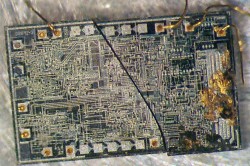
Gideon Analytical Laboratories received a programmable logic device (PLD) P18586P for failure analysis. A programmable logic device is an electronic component used to build reconfigurable digital circuits. Unlike a logic gate, which has a fixed function, a PLD has an undefined function at the time of manufacture. Before the PLD can be used in a circuit it must be programmed. A PLD is a combination of a logic device and a memory device. The memory is used to store the pattern that was given to the chip during programming. Most of the methods for storing data in an integrated circuit have been adapted for use in PLDs. Logic devices provide specific functions, including device-to-device interfacing, data communication, signal processing, data display, timing and control operations, and almost every other function a system must perform. The PLD P18586P supposedly had bad output. The goal was to determine the reason why.

ST Microelectronics ASC T6108 Triacs

ST Microelectronics ASC T6108 Triacs

Gideon Analytical Laboratories received two newly designed ST Microelectronics ASC T6108 Triacs in a TO-220AB package. A TRIAC is a three terminal semiconductor device for controlling current.Its formal name is bidirectional triode thyristor or bilateral triode thyristor. A thyristor is analogous to a relay in that a small voltage and current can control a much larger voltage and current. The goal was to determine if these ASC T6108 Triacs were reliable.

Electronic failure analysis was performed on the ASC T6108 Triacs. There were no mechanical marks on the units. The Triac was decapsulated. The die was in PNPN vertical diffusion on a monolithic silicon chip. Passivation integrity was tested; the passivation was very robust. Etching exposed the underlying diffusions; all of the guard rings and diffusions were properly protected by silicon dioxide. All the geometries for the die layout had no anomalies in the pattern or registration. There were no dicing anomalies. There were no chatter marks on the Kerf. The “OUT” connection was very secured. This was a reliable product.

Failed On Semi MC14070BG CMOS SSI

Failed On Semi MC14070BG CMOS SSI

Gideon Analytical Analytical Laboratories received one On Semi MC14070BG CMOS SSI  in a SOEIAJ-14 package, with the 15V supply line pulled down to 3.5V. The MC14070B quad exclusive OR gate and the MC14077B quad exclusive NOR gates are constructed with MOS P−channel and N−channel enhancement mode devices in a single monolithic structure. These complementary MOS logic gates find primary use where low power dissipation and/or high noise immunity is desired. The CMOS is a Complementary metal–oxide–semiconductor, which is a technology for constructing integrated circuits. CMOS technology is used in microprocessors, microcontrollers, static RAM, and other digital logic circuits. CMOS technology is also used for several analog circuits such as image sensors (CMOS sensor), data converters, and highly integrated transceivers for many types of communication. The goal was to determine why the On Semi MC14070BG CMOS SSI was failing.

Anode Electrode for Lithium-Ion Battery

Anode Electrode for Lithium-Ion Battery

Gideon Analytical Laboratories received one section of the anode electrode to identify the black marking on the copper foil. This anode electrode is used in Lithium-ion batteries. A Lithium-ion battery is a type of rechargeable battery in which lithium ions move from the negative electrode to the positive electrode during discharge and back when charging. Lithium-ion batteries use an intercalated lithium compound as one electrode material, compared to the metallic lithium used in a non-rechargeable lithium battery. The electrolyte, which allows for ionic movement, and the two electrodes are the constituent components of a lithium-ion battery cell. The goal was to conduct an electronic failure analysis to identify the black marking on the copper foil.

Fairchild RFP40N10 power MOSFETs

Fairchild RFP40N10 power MOSFETs

Gideon Analytical Laboratories receivedthree Fairchild RFP40N10 power MOSFETs. A MOSFET is a specific type of metal oxide semiconductor field-effect transistor (MOSFET) designed to handle significant power levels.Compared to the otherpower semiconductor devices, for example, an insulated-gate bipolar transistor (IGBT) or athyristor, its main advantages are highswitchingspeed and good efficiency at low voltages. It shares with the IGBT an isolated gate that makes it easy to drive. They can be subject to low gain, sometimes to degree that the gate voltage needs to be higher than the voltage under control. The [Fairchild](http://Fairchild RFP40N10 power MOSFET) RFP40N10 power MOSFET is an N-Channel power MOSFET manufactured using MegaFET process, which uses featuresizes approaching those of LSI integrated circuits givesoptimum utilization of silicon. These MOSFETs were in TO-220AB packages. All of the terminals on theFairchild RFP40N10 power MOSFETs were shorted.

IC EMI MKP .33uF Film Capacitors Failures

IC EMI MKP .33uF Film Capacitors Failures

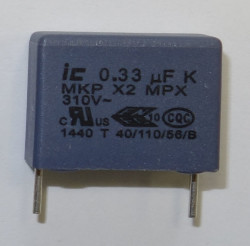
Gideon received six used IC .33uF K MKP X2 MPX film capacitors with lower than expected capacitance for failure analysis. EMI suppression capacitors are used to suppress any noise from an electronic device by reducing the input impedance of the device. These types of capacitors have 2 classifications, X and Y. The X-type connects line to line. X capacitors have three categories;  X1, X2, and X3. These are based on voltage. Class X1 is used where the peak voltage is greater than 2500 volts and less than 4000V. Class X2 used in applications where the peak voltage is equal to below 2500 volts. Class X3 are used where the peak voltage is less than or equal to 1200 volts. Y capacitors are connected from line to ground. They most often have a low capacitance value. If a Y capacitor fails, the potential for electrical shock is present. OUCH!!!  Y capacitors have four categories, Y1, Y2, Y3, and Y4. Y1 capacitors are used with voltages up 500Vac, Y2 with voltages up to 300Vac, Y3 with voltages up to 250Vac and Y4 with voltages up to 150Vac. X class capacitors are rated up to 660Vac and Y capacitors are manufactured with voltage ratings up to 440Vac. X class capacitors are manufactured with a variety of dielectric materials. This includes polyester, polypropylene, ceramic and paper while Y capacitors are typically produced out of ceramic and paper dielectrics.

Susumu RG3216-1000-B-T-T1 Film Resistor Failures

Susumu RG3216-1000-B-T-T1 Film Resistor Failures

Gideon received ultra precision calibration resistors. These resistors have a tolerance of .1%. The ultra precision thin film resistors are designed for high precision circuitry. They have excellent stability and reliability over the operating temperature range and low TCR characteristics.

The resistors were running about .3 to .4 ohm too high.

OnboardTest 1Test 2Test 3Test 4Test 5decapsulatedHalogens
PCB1100.577100.4160100.3995100.19100.1943100.0991
PCB2100.5732100.4972100.4019100.4735100.4732100.4010100.3911chloride

As one can see by the above table, after the 5th test, the resistor on the first PCB recovered. The second PCB resistor did not, therefore, the resistors were taken apart to find the cause of the higher resistance.

NEC 104PW161 Inverter Board

NEC 104PW161 Inverter Board

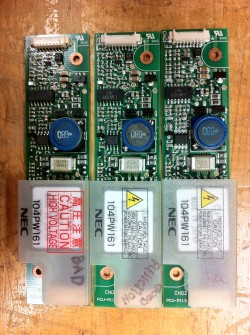
Gideon received two failed NEC 104PW161 inverter boards with Micro Fuse chip circuit protectors failing. Rather than performing a failure analysis of the fuse, the circuit was analyzed to assess the possible overuse of the fuse. This was done because the failure rate is beyond the infant mortality and before the manufacturers’ end of life prediction leading to a reliability concern over the fuse. Whether this is a true fuse issue or a design issue, this is the first step in resolving the matter.

Vishay SS26 Schottky Rectifier

Vishay SS26 Schottky Rectifier

Gideon received several Vishay SS26 Schottky rectifiers for failure analysis. It was thought something within the manufacturing process caused the devices to have a premature end of life in what would be considered a non-stressful application.

The Schottky diode is what is called a majority carrier device. It has advantages in terms of speed because it does not rely on holes or electrons recombining when they enter the opposite type of region as in the case of a conventional diode. When making the devices small, the normal RC type time constants can be reduced, making these diodes an order of magnitude faster than the conventional PN diodes. This is the prime reason why they are used in radio frequency applications.

Corrosion on Pcb Inside Valve

Corrosion on Pcb Inside Valve

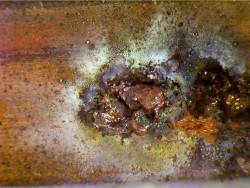
Gideon Analytical Laboratories received two valves with failed printed circuit boards (PCBs) and corrosion inside the housing. The goal was to determine what the corrosion was and why the PCB failed. A printed circuit board mechanically supports and electrically connects electronic components using conductive trace lines, pads and other features etched from copper sheets laminated onto a non-conductive substrate. The boards are made from glass reinforced plastic with copper tracks in the place of wires. Components are fixed in position by drilling holes through the board, locating the components and then soldering them in place. The copper tracks link the components together forming a circuit. PCBs are used in all but the simplest electronic products. They are a quintessential part of the electronics industry. With decades of experience working with PCBs and advanced knowledge in electrical engineering and chemistry, this proved to be a case that was easy to solve.

Johanson Dielectrics PN 500T15W103MV4E MLCCs

Johanson Dielectrics PN 500T15W103MV4E MLCCs

Gideon Analytical Laboratories received two printed circuit board (PCB) assemblies, each of which had a single multilayer ceramic capacitor (MLCC) suspected of failing. These MLCCs are Johanson Dielectrics PN 500T15W103MV4E. A PCB mechanically supports and electrically connects electronic components using conductive tracks, pads and other features etched from copper sheets laminated onto a non-conductive substrate. Components (e.g. capacitors, resistors or active devices) are generally soldered on the PCB. Advanced PCBs may contain components embedded in the substrate. Multilayer ceramic capacitors are fixed value capacitors in which ceramic the material acting as the dielectric. It is made up of two or more alternating layers of ceramic and a metal layer acting as the electrodes. There are various types of materials that could function as the dielectric in a capacitor. The goal was to determine the cause of the Johanson Dielectrics PN 500T15W103MV4E MLCCs failure.

MuRata PS (Pn 8600118) MOSFET Failures

MuRata PS (Pn 8600118) MOSFET Failures

Gideon Analytical Laboratories received 8Murata Ps DC-DC converters (pn 8600118) with suspected MOSFET failures. A DC-DC converter is an electronic circuit or electromechanical device that converts a source of direct current (DC) from one voltage level to another. It is a type of electric power converter. Power levels range from very low (small batteries) to very high (high-voltage power transmission). The DC to DC converters MOSFET is a type of field-effect transistor (FET). It has an insulated gate, whose voltage determines the conductivity of the device. This ability to change conductivity with the amount of applied voltage can be used for amplifying or switching electronic signals. Gideon Analytical Laboratories received 8 totalMurata Ps DC-DC converters (pn 8600118) in two separate batches. The first batch had a different mode of failure than the second batch. The goal was to determine the cause of the failures by focusing specifically on the MOSFETs.

PCB Solder Mask Delamination

PCB Solder Mask Delamination

GideonAnalytical Laboratories received several Printed Circuit Boards (PCBs) that were experiencing delamination of the solder masks, specifically on the EMI filter card. A PCB mechanically supports and electrically connects electronic components using conductive tracks, pads and other features etched from copper sheets laminated onto a non-conductive substrate. Components (e.g. capacitors, resistors or active devices) are generally soldered on the PCB. Advanced PCBs may contain components embedded in the substrate. Electromagnetic interference (EMI), also called radio-frequency interference (RFI) when in the radio frequency spectrum, is a disturbance generated by an external source that affects an electrical circuit by electromagnetic induction, electrostatic coupling, or conduction.The disturbance may degrade the performance of the circuit or even stop it from functioning. In the case of a data path, these effects can range from an increase in error rate to a total loss of the data.

Problems with Track Lighting

Problems with Track Lighting

Gideon Analytical Laboratories received several lighting tracks for failure analysis. They all had what appeared to be arcing which caused severe copper pitting, melting of the Noryl, and distortion of the power bus bar. The neutral bus was also pitted but not nearly as bad as the power rail. Electrical arcing is an electrical breakdown of a gas that produces an ongoing electrical discharge. The current through a normally non-conductive medium such as air produces a plasma; the plasma may produce visible light. An arc discharge is characterized by a lower voltage than a glow discharge, and it relies on thermionic emission of electrons from the electrodes supporting the arc. An arc between two electrodes can be initiated by ionization and glow discharge, as the current through the electrodes is increased. The breakdown voltage of the electrode gap is a function of the pressure, the distance between electrodes and the type of gas surrounding the electrodes. When an arc starts, its terminal voltage is much less than a glow discharge, and current is higher. An arc in gases near atmospheric pressure is characterized by visible light emission, high current density, and high temperature. NORYL resins are a rare example of a homogeneous mixture of two polymers. Most polymers are incompatible with one another, so tend to produce separate phases when mixed. The two polymers compatibility in NORYL resins is due to the presence of a benzene ring in the repeat units of both chains. The goal was to determine why there was electrical arcing on these lighting tracks.

Electrolytic Capacitor 1

Electrolytic Capacitor 1

Gideon Analytical Laboratories received three electrolytic capacitors that were failing in the field. A capacitor stores electrical energy. They have two terminals separated by some type of insulating material, known as a dielectric. Usually, these dialectics are metal plates and the dielectric is made of materials like ceramics, mylar, or glass. Electrolytic capacitors are a type of capacitor that uses an electrolyte as one of its plates to achieve a larger capacitance per unit volume. The storage potential of a capacitor is known as capacitance and is measured in farads, and since most capacitors are generally small, micro farads are the most often used measurement of capacitance. All of these capacitors measured a short across the respective terminals. The goal was to determine the cause of failure.

Electronic Transformers

Electronic Transformers

Gideon Analytical Laboratories received four electronic transformers, some of which were failing. Three transformers produced no output and the fourth was tested using an oscilloscope and found to function. Transformers are electrical devices typically used to transfer energy between two or more circuits using electromagnetic induction. Electromagnetic induction is the production of an electromotive force across a conductor when it is exposed to a varying magnetic field. Using Faraday’s Law with high magnetic permeability core properties, transformers can efficiently change AC voltages from one voltage level to another within a given power network. The goal was to find out the cause of these failures.

MH Ballast Black Box PCB

MH Ballast Black Box PCB

Gideon Analytical Laboratories received several electronic metal-halide (MH) ballast black semiconductor diode, but it also permits current to flow in the reverse direction when its “Zener voltage” is reached. The goal was to expose the circuitry and reverse engineer the cause of failure of the three components that were failing at a high rate.

Failure analysis ensued. First, the zener diodes and fuses were exposed and potting material removed so that the circuitry was revealed. After analysis of the circuitry, a notable problem stood out. The configuration had no “soft” current limiting impedance for input line spikes. Input utility power has common surges and spikes. In a regular household, this sudden inrush of electrical current exposes unprotected equipment to damaging voltages. It can overheat motors, burn out lights and damage electronic components. In order to mitigate this potential threat, a surge protector is a good idea. However, all electronics should have some inrush limiting device to prevent these input power voltage spikes from damaging equipment.

TDK-Lambda KPSA Power Supply

TDK-Lambda KPSA Power Supply

The Lambda KPSA10-15 is a self-contained, offline power supply capable of supply 15Volts DC at 1 Ampere from a universal input of 120VAC ~ 240VAC, 50/60Hz. It is designed for PCB mounting as a module and is passively cooled. Several of these power supplies failed in the field in 2-2.5 years. There was no sign of damage or environmental contamination on the PCB. All arrived DOA. The component selection was mediocre except for the electrolytic capacitors, which were chosen wisely.

Soldering Problems Printed Circuit Boards

Soldering Problems Printed Circuit Boards

Gideon Analytical Laboratories received four Printed Circuit Boards which had either opens or intermittent behavior on some of the P1 connector pins. A Printed Circuit Board (PCB)mechanically supports and electrically connects electronic components using conductive tracks, pads and other features etched from copper sheets laminated onto a non-conductive substrate. PCBs can be single sided,double sided,or multi-layered. An open circuit is an incomplete electrical circuit in which no current flows. Gideon Analytical Laboratories was asked specifically if the soldering on the PCBs was problematic.

Leakage Current from MLCC on PCB

Leakage Current from MLCC on PCB

Gideon Analytical Laboratories received one failed multilayer ceramic capacitor (MLCC) on a printed circuit board (PCB). Multilayer ceramic capacitors are fixed value capacitors in which ceramic the material acting as the dielectric. It is made up of two or more alternating layers of ceramic and a metal layer acting as the electrodes. There are various types of materials that could function as the dielectric in a capacitor, for example, glass, porcelain, paper, or mica. No electrical information was supplied.

Fairchild Transient Voltage Suppressor SMBJ5VOCA

Fairchild Transient Voltage Suppressor SMBJ5VOCA

Gideon Analytical Laboratories received two Fairchild transient voltage suppressors (TVS) SMBJ5V0CA. Both diodes were identified as having failed.Transient Voltage Suppressors (TVS’s) are devices used to protect vulnerable circuits from electrical overstress such as that caused by electrostatic discharge, inductive load switching, and induced lightning. Within the TVS, damaging voltage spikes are limited by clamping or avalanche action of a rugged silicon pn junction which reduces the amplitude of the transient to a nondestructive level. All semiconductors have to be confirmed failure and in what sense they have failed. The diode gave an abnormal curve trace in which the surface is inverted.

IR AUIRF7648M2 Power MOSFET

IR AUIRF7648M2 Power MOSFET

Gideon Analytical Laboratories received two failed AUIRF7648M2 MOSFETs. These are rather new on the market and specifically designed for the automotive industry. Typically, when a MOSFET fails, all terminals short. It is the failure analyst’s job to discover how the MOSFET failed in the application by combining the schematics, clues found in the failure analysis, and clues found on the PCB to give a complete picture to help resolve the client’s problem.

Pulse Transformer 144A9111

Pulse Transformer 144A9111

Gideon Analytical Laboratories received two 144A9111 pulse transformers with the secondary wiring shorting. Transformers are devices that transfer electric energy from one circuit to another, usually with a change in voltage. Pulse transformers are transformers optimized for transmitting rectangular electrical pulses. Ideally, pulse transformer designers try to minimize voltage droop, rise time, and pulse distortion. Small versions called signal types are used in digital logic and telecommunications circuits, often for matching logic drivers to transmission lines. Medium-sized power versions are used in power-control circuits such as camera flash controllers. Larger power versions are used in the electrical power distribution industry to interface low-voltage control circuitry to the high-voltage gates of power semiconductors. Special high voltage pulse transformers are also used to generate high power pulses for radar, particle accelerators, or other high energy pulsed power applications. Of the two144A9111 pulse transformers with the secondary wiring shorting, one was completely exposing the seconding wire and the other was still intact on the printed circuit board (PCB). The goal was to determine the cause of the failure.

Vishay ES2D SM Rectifier

Vishay ES2D SM Rectifier

Gideon Analytical Laboratories, Inc. received on Vishay ES2D rectifier on a PCB. The initial condition and observation were that the diode had a conformal coating on a small circuit board in which when tested on a curve tracer had excessive leakage current across the junction and caused the PCB to fail in the application.

Rectifiers are primarily used for conducting in one direction and blocking in the other. The Vishay ES2D is an ultra-fast rectifier, which means the reverse recovery time should be less than 100 ns. Rectifiers are primarily used for power or signal conditioning in a variety of applications. This can range from high power output rectifier applications to low power switching rectifier requirements. They can be used for clamping networks on SMPS, dampening and modulating diodes on deflection circuits in CRTs, or freewheeling diodes on inductive loads etc.

2N3700 Transistor

2N3700 Transistor

Gideon Analytical Laboratories received one 2N3700 transistor for failure analysis. A new 2N3700 transistor was also received for comparison. A transistor is a semiconductor device used to amplify and switch electronic signals and electrical power. It is composed of semiconductor material with at least three terminals for connection to an external circuit. A voltage or current applied to one pair of the transistor’s terminals changes the current through another pair of terminals. Because the controlled (output) power can be higher than the controlling (input) power, a transistor can amplify a signal. The 2N3700 NPN bipolar transistor had a collector base maximum voltage of 140V, a collector-emitter maximum voltage of 80V, and an operating temperature range from -55°C to 175°C. The goal was to identify the reason for failure.

Atmel AT91SAM9260 Based Embedded MPU

Atmel AT91SAM9260 Based Embedded MPU

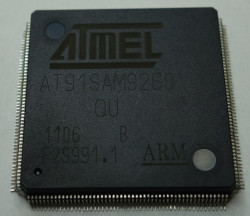
Gideon Analytical Laboratories, Inc. received Atmel AT91SAM9260 based Embedded MPU; it is a 180 MHz ARM926EJ-S ARM Thumb Processor. The SAM9260 is based on the integration of an ARM926EJ-S processor with fast ROM and RAM memories and a wide range of peripherals. It embeds an Ethernet MAC, one USB Device Port, and a USB Host controller. It also integrates several standard peripherals, such as the USART, SPI, TWI, Timer Counters, Synchronous Serial Controller, ADC, and MultiMedia Card Interface. The SAM9260 is architecture on a 6-layer matrix, allowing a maximum internal bandwidth of six 32-bit buses. It also features an External Bus Interface capable of interfacing with a wide range of memory devices. The device was with the concern that it did not function at 50C.The device was wired up in such a way to determine the continuity from the power, ground and I/O pins at room temperature and 55C. The testing revealed that the power and some I/O pins were intermittent at 55C. The device was put on a known good PCB with full functionality and it failed. A good Atmel was installed and it worked on the same PCB without any issues. The device was decapsulated revealing the wires bonds both on the lead frame and the die. As can be seen in the photographs, the die had several ball bonds that came off during decapsulation. The coefficient of thermal expansion is greater for the molding compound than it is for the gold balls. At higher temperature, this epoxy expansion moves the ball bonds and renders them intermittent. No bond issues were noted on the interconnects to the lead frame. The bonding issue was primarily on one side of the die and primarily with one lot. This was a manufacturing issue.

Melexis CMOS Hall Sensors

Melexis CMOS Hall Sensors

Gideon Analytical Laboratories received five failed Melexis US2881 in a UA style package for failure analysis. The Melexis US881 is a bipolar Hall-effect switch designed in mixed signal CMOS technology. A Hall-effect sensor is a transducer that varies its output voltage in response to a magnetic field. When a current-carrying conductor is placed into a magnetic field, a voltage will be generated perpendicular to both the current and field. This is the Hall effect. Hall sensors can be used in switching, positioning, and detection applications.

JanTXV1N821 Diode

JanTXV1N821 Diode

Gideon Analytical Laboratories received a JanTXV1N821 Zener diode for electronic failure analysis. A diode is a two-terminal electronic component with asymmetric conductance; it has low (ideally zero) resistance to current in one direction and high (ideally infinite) resistance in the other. A semiconductor diode is the most common type of diode; it is a crystalline piece of semiconductor material with a p–n junction connected to two electrical terminals. A Zener diode is a diode which allows current to flow in the forward direction in the same manner as an ideal diode but also permits it to flow in the reverse direction when the voltage is above a certain value, known as the breakdown voltage. Zener diodes are semiconductor diodes which have been manufactured to have their reverse breakdown occur at a specific, well-defined voltage. The JanTXV1N821 diode is a surface mounted diode with a voltage selection range between 6.2 and 6.55 V. Its operating temperatures are between -65° C and 175º C, has tin-lead plated leads and comes in a hermetically sealed glass case. The JanTXV1N821 diode tested open. The goal was to identify the cause of the failure.

Compound Gate Drivers

Compound Gate Drivers

Gideon Analytical Laboratories received four National LM5111-1m dual 5A compound gate drivers. There were two bad devices and two good ones for comparison. A gate driver is a power amplifier that accepts a low-power input from a controller IC and produces a high current drive input for the gate of a high-power transistor. They consist of a level shifter in combination with an amplifier. They can power IGBTs and MOSFETs. They can help control electronics that need higher power than the PWM signals can generate. No information was given to Gideon Analytical Laboratories about the nature or cause of these failing National LM5111-1m dual 5A compound gate drivers.

Linear Microcircuit Modular Hybrid

Linear Microcircuit Modular Hybrid

Gideon Analytical Laboratories received one linear microcircuit modular hybrid FK23009 for electronic failure analysis. A hybrid integrated circuit (HIC) is a miniaturized electronic circuit constructed of individual devices, such as semiconductors and passive components like resistors or inductors, and typically encapsulated in epoxy. The hybrid microcircuit is used in military and communications applications and is excellent for creating custom analog circuits, such as amplifiers and modulators. Thick film technology is often used as the interconnecting medium for hybrid integrated circuits. The modular hybrid FK23009 had no output on lead 1. The goal was to perform electronic failure analysis and discover the reason why it failed.

Failed 1210 MLCCs

Failed 1210 MLCCs

Gideon Analytical Laboratories received three 1210 Multi-Layer Ceramic Capacitors (MLCC) for analysis. Multilayer ceramic capacitors are fixed value capacitors in which ceramic the material acting as the dielectric. It is made up of two or more alternating layers of ceramic and a metal layer acting as the electrodes. There are various types of materials that could function as the dielectric in a capacitor, for example, glass, porcelain, paper, or mica. The MLCCs were from a Time Hub printed circuit board (PCB). The goal of Gideon Analytical Laboratories was to diagnose the cause of these failures.

Microsemi DZ771215A diode

Microsemi DZ771215A diode

Gideon Analytical Laboratories received a failed Microsemi DZ771215A 10 watt diode for failure analysis. Two working devices were provided for comparison. A diode is an electric device that has two electrodes (anode and cathode) and that only allows current to flow in one direction, resisting current in the other direction. Diodes are used copiously as rectifiers, which convert alternating current (AC) to direct current (DC) to change the amplitude of the signal in proportion to its voltage in the circuit. A semiconductor diode, the most common type today, is a crystalline piece of semiconductor material with a p–n junction connected to two electrical terminals. The Microsemi DZ771215A semiconductor is made with silicon, has a 6.8-volt maximum regulator voltage rating, and is in a hermetically sealed case. The goal was to identify the cause of the failure.

Thermal Damage to MLCC

Thermal Damage to MLCC

Gideon Analytical Laboratories received one MLCC on a DC input noise filter PCB on which to perform failure analysis. MLCCs (Multi-Layered Ceramic Capacitors) are extremely ubiquitous in the electronics field; it was estimated that around 1000 billion are produced per year. The MLCC has severe thermal damage but was still intact to the pads via the termination solder connections.

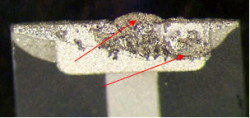
Analytical services were provided. The MLCC could not be cut from the PCB and the PCB could not be cut because of the fragile nature of the condition. The MLCC had clearly been very hot; it burnt and carbonized the PCB, and molten metal was evident. The MLCC was cross-sectioned to reveal the cause of the failure.

LM5111-1M Dual 5A Compound Gate Drivers

LM5111-1M Dual 5A Compound Gate Drivers

" Gideon Analytical Laboratories received four National Semiconductor LM5111-1M dual 5A compound gate drivers. A gate driver is a power amplifier that accepts low-power input from a controller integrated circuit and produces a high-current drive input for the gate of a high power transistor. These LM5111 Dual Gate drivers have high peak output current and efficiency. Each of the compound output driver stage includes MOS and bipolar transistors operating in parallel that together sink more than 5A peak from capacitive loads. Each device will drive two N-Channel MOSFETs. Two devices were failures and the other two were good devices. The goal was to determine the cause of the failures.

MLCC PCB Flexing

MLCC PCB Flexing

Gideon Analytical Laboratories received one MLCC (Multi-Layer Ceramic Capacitor) with a reported short. Ceramic capacitors are the most produced and used capacitors in electronic equipment. An MLCC consists of a number of individual capacitors stacked together in parallel and contacted via the terminal surfaces. Every MLCC basically consists of a ceramic dielectric, a metalized electrode, and connecting terminals. MLCCs can range in capacitance and voltage rating. Many times they serve to function as devices to reduce electrical noise and provide stability in an operating system. The goal was to use failure analysis to determine the cause of the short.

Spectrum Pi Filters

Spectrum Pi Filters

Gideon Analytical Laboratories received two Spectrum Control Pi filters, a failed Pi filter, and a good Pi filter from the same vintage as the failed one, for comparison. Capacitor-input filters (also known as Pi filters) are a type of electronic filter used to remove unwanted frequencies from a signal. Pi filters are primarily constructed of two capacitors and an inductor and are used in situations where the ripple of a signal or the AC and DC currents within the signal are found to interfere with each other.

144A9284P4 Resistors

144A9284P4 Resistors

Gideon Analytical Laboratories received several GE Aviation 144A9284P4 carbon film resistors for failure analysis evaluation. A resistor is a passive two-terminal electrical component that implements electrical resistance as a circuit element. Their purpose is for creating a precise quantity of resistance for insertion into a circuit; they are typically constructed of metal wire or carbon and engineered to maintain a stable resistance value over a wide range of environmental conditions. They are frequently integrated within integrated circuits within the silicon; the resistor changes the voltage or the current in the line. It’s measured in ohms (Ω). There were five working and five failed 144A9284P4 carbon film resistors. The failed resistors exceeded the 2% tolerance designated for this type of carbon film resistor.

Destructive Physical Analysis of Pi Filters

Destructive Physical Analysis of Pi Filters

Gideon Analytical Laboratories was asked specifically to perform Destructive Physical Analysis (DPA) on Spectrum Control and Tusonix Pi filters, respectively, in order to compare performance and reliability. Destructive Physical Analysis includes the dissection of a device to determine construction, assembly, and compliance with certain standards and specifications. DPA on these Pi filters centered around construction and materials analysis.

DPA was performed on the Spectrum Control and Tusonix Pi filters, respectively. Both electronics manufacturers used a ferrite cylinder around a copper lead as the inductor. The lead, as it exited the ferrite cylinder, was soldered to a toroidal capacitor on both ends inside an epoxy hermetic sealed metal structure. The two Pi filters were electrically tested for resistance, capacitance, and inductance before being mechanically separated and examined. SEM-EDS was also conducted to determine material composition.

Fairchild 740L6000 Internal Contamination

Fairchild 740L6000 Internal Contamination

Gideon Analytical Laboratories received four Fairchild 74OL6000 field failed Optocouplers along with three good (virgin green dot) devices in which a comparison could be done. The LSTTL input compatibility is provided by an input integrated circuit, with industry standard logic levels. This input amplifier IC switches a temperature compensated current source driving a high speed 850 nm AlGaAs LED emitter. This integration scheme eliminates CTR degradation over time and temperature. The emitter is optically coupled to an integrated photodetector/high-gain, high-speed output amplifier IC. The TTL compatible output has a totem-pole with a fan-out of 10. The CMOS compatible output has an open collector Schottky clamped transistor that interfaces to any CMOS logic between 4.5 and 15 volts. More information on this part can be seen at http://www.alldatasheet.com/datasheet-pdf/pdf/179405/FAIRCHILD/74OL6000.html. Three of the optocouplers were tested in a circuit (the input voltage on pin 2 could be varied from 0 volts to 2.3 volts) and found the output remained low. One intermittent opto functioned in the test circuit, as did the green dotted optos. There was no electrical difference between this “quasi-failed devices” than a good green dotted opto. Next, the optos were tested for leakage current from pin to pin to establish which side of the opto was causing the problem.

Spectrum Control Pi Filter

Spectrum Control Pi Filter

Gideon Analytical Laboratories received a single failed Spectrum Control Pi filter on which to perform failure analysis. Capacitor-input filters (also known as Pi filters) are a type of electronic filter used to remove unwanted frequencies from a signal. They are called “Pi” filters because of their resemblance to the Greek letter “Pi”. Pi filters are primarily constructed of two capacitors and an inductor and are used in situations where the ripple of a signal or the AC and DC currents within the signal are found to interfere with each other. This Pi filter had a dead short between the lead and the body.

FCS RV4141V GFI Controller

FCS RV4141V GFI Controller

Gideon Analytical Labs received two failed RV4141AM ground fault interrupter controllers. The devices had far different impedance values than a new one did on several of the input pins. The RV4141A is a low power controller for AC outlet appliance leakage circuit interrupters. These devices detect hazardous current paths to ground such as an appliance falling into the water. The interrupter then opens the circuit line before a harmful or lethal shock occurs. Internally, the RV4141A has a diode bridge rectifier, Zener shunt regulator, op-amp, current reference, time delay circuit, latch and SCR driver. In addition, an external sense transformer, SCR, relay, two resistors and component selection, unique applications, resigned components, etc.

Passivation Integrity Test on Transistors

Passivation Integrity Test on Transistors

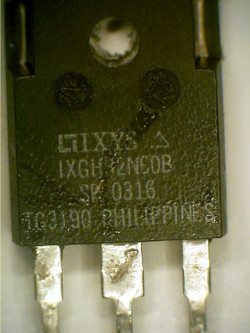
Gideon Analytical Laboratories performed failure analysis on several IXYSIGBT IXGH32N60B transistors, encased in TO-247 packages. These transistors are 60 amp 600V 2.3 Rds 200W. The concern was that the devices were not functioning as 600V but topped out at 480V in the application. After failure analysis was performed on the transistors, the company requested that Gideon Analytical Laboratories administer passivation integrity tests on the two good IXYSIGBT IXGH32N60B transistors.

The transistors were prepared for passivation integrity testing. The termination rings were between the guard ring and the gate ring. The central part of the device where the gate and emitter region meet had little effect in the passivation integrity test. There was a particular area of concern on the device. After the passivation integrity test, some of the posts were missing the metal but most of the metal was still intact. The emitter area was excellent. However, Gideon Analytical Laboratories concluded that metal under the glassivation near the edges is vulnerable to attack by the etchant while the emitter appears very good in comparison. The lower voltage was the not a manufacturing problem but the installation site was insulated and the ambient temperature rose by 30 C. Several of these failed due to junction temperatures in excess of the manufacturer’s limit.

LCD Analysis

LCD Analysis

Gideon Analytical Laboratories received several liquid-crystal displays (LCDs) that had fading issues; there were five failing LCDs and a good LCD for comparison. An LCD is a flat panel display, electronic visual display, or video display that uses the light modulating properties of liquid crystals. LCDs are extremely common in electronic devices such as laptops, digital clocks, and watches, pocket calculators, microwave ovens, or CD players. LCDs are also used in televisions and produce a sharp and vivid image. LCDs are can be small, inexpensive to manufacture, and do not draw a lot of power. The LCDs that were received had fading issues on the side closest to the seal. The fading had occurred over time. The goal was to determine the cause of these failures.

NEC Inverter Board

NEC Inverter Board

Gideon Analytical Laboratories received three sample NEC 104PW161 power inverter boards for failure analysis. A power inverter is designed to convert direct current (DC) to alternating current (AC). Inverters are used to operate all types of electrical equipment that uses batteries. DC current is what batteries store, but most electrical devices need AC current. These NEC104PW161 inverters had an output voltage of 520V and an output current of 5.5mA. The goal was to determine why they were failing.

Surface Mount Tantalum Capacitors

Surface Mount Tantalum Capacitors

Gideon Analytical Laboratories received two surface mount (SM) tantalum capacitors that had internal resistive shorts. Capacitors are passive, two-terminal electrical components used to store energy. They vary in construction, but all have at least two electrical conductors that are separated by an insulator, known as a dielectric. Tantalum capacitors are a type of electrolytic capacitor, which are ubiquitous in electronic circuits. Tantalum capacitors have a high capacitance per volume and weight and are more expensive than any other commonly used capacitor. The goal was to determine the causes of these internal resistive shorts.

CMOS RC Timer

CMOS RC Timer

Gideon Analytical Laboratories received two ICM7555 CMOS RC timers. Each device was pulling down the output.

The ICM7556 is a CMOS RC timer that provides a stable controller capable of producing accurate time delays or frequencies. The ICM7556 is a dual ICM7555, with the two timers operating independently of each other, sharing only V+ and GND. In the one-shot mode, the pulse width of each circuit is precisely controlled by one external resistor and capacitor. Unlike the regular bipolar 555/6 devices, the control voltage terminal need not be decoupled with a capacitor. The circuits are triggered and reset on falling (negative) waveforms, and the output inverter can source or sink currents large enough to drive TTL loads, or provide minimal offsets to drive CMOS loads.

FTIR of LEDs

FTIR of LEDs

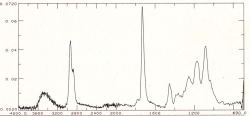
Gideon Analytical Laboratories received a Unity PLCC LED and was asked to perform FTIR analysis for the purpose of materials compatibility. Fourier transform infrared spectroscopy (FTIR) is a process used to acquire an infrared spectrum of absorption, emission, or photoconductivity of some substance. It can work with solids, liquids, or gasses, and can reveal the chemical composition of numerous materials. Gideon Analytical Laboratories was asked specifically to utilize FTIR on two substances: a white encapsulate and a clear/colorless material.

Thermal Evaluation (TMA and DSC)

Thermal Evaluation (TMA and DSC)

Gideon Analytical Laboratories performed thermal mechanical analysis TMA and differential thermal analysis (DSC) on two plastics which compose the encapsulation of Unity LEDs. TMA is a measurement of a change of a dimension or a mechanical property when it is subjected to a temperature regime. DSC is a technique for quantitatively analyzing the chemical composition of a substance by observing its thermal behavior while being heated. The samples were disassembled and separated into three items to analyze; the white casing, the clear resin, and the clear core material.

Quartz Crystal Oscillator

Quartz Crystal Oscillator

Gideon Analytical Laboratories received one failed surface mount device (SMD) 200 ECSH quartz crystal oscillator and a good SMD 200 ECSH for comparison. A crystal oscillator uses the mechanical resonance of a vibrating crystal of piezoelectric material to create an electrical signal with a very precise frequency, such as a quartz crystal. This frequency is commonly used to keep track of time, to provide a stable and repeatable clock signal for digital ICs, and to stabilize frequencies. Oscillator circuits incorporating them became known as crystal oscillators, but other piezoelectric materials including polycrystalline ceramics are used in similar circuits.

Ion Chromatograph Analysis on Three Samples

Ion Chromatograph Analysis on Three Samples

Gideon Analytical Laboratories received three samples in polyethylene bottles to develop an analytical procedure for determining chloride using an ion chromatograph. Ion chromatography is a process that allows the separation of ions and polar molecules based on their charge. Using ion chromatography, one can identify concentrations of major anions, including elements like sodium, lithium, calcium, and many others. Aqueous samples are quantitatively measured in the parts-per-million range.

The two solutions were diluted 1:25 with DI water (18.2megaohm) water from a point of use Millipore purification system. The samples were then analyzed by ion chromatography; it was carried out with an instrument that consisted of HP1050 pump and autosampler with a Dionex AMMS suppressor and conductivity detector. Data was captured using an HP Chemstation. Displayed in the table below is the ion chromatograph readings of the respective samples. The picture shows the first sample (in red) at 3.4 PPM and the second sample (in blue) at 35.1 PPM. The results of the ion chromatography revealed the certain presence of chloride; absolute identity was made by spike, subtraction, and standards.

Flex Circuit Failure

Flex Circuit Failure

Gideon Analytical Laboratories received three failed Kapton based flex circuits with opens in the trace lines. The origin of the open was not known. The opens in the trace lines were traced down on the Kapton to several eyelets where contact was supposed to be made.

No areas were distinguished and no anomalies were found suggesting a trace copper foil problem on any of the circuits received. A cross-section of the above trace line and eyelet demonstrates the trace line (the line in the middle) either has been dislodged from the barrel or was never connected.

220 Picofarad AVX Capacitor

220 Picofarad AVX Capacitor

Gideon Analytical Laboratories received four 220 picofarad AVX capacitors for failure analysis. There are a variety of capacitors, including ceramic, aluminum, film, and tantalum, but all serve the same purpose, which is to store electrical charge. They are passive electrical components with at least two electrical conductors separated by an insulator (dielectric). The four220 picofarad AVX capacitors were giving low resistance readings.

Failure analysis ensued. The four 220 picofarad AVX capacitors were inspected for mechanical cracks, which would propagate upon voltage; no cracks were found on the external ceramic. The capacitors were measured and tested on a curve tracer since they had low resistance, otherwise, an IR meter would be used. The current was gradually increased to the point where dendrites would burn out. The resistance was measured again. No change occurred. The capacitors were baked and then retested again; no appreciable change occurred in resistance measurements. These test results indicate there was most likely an internal problem with the capacitor.

Digital Signal Processors (DSPs)

Digital Signal Processors (DSPs)

Gideon Analytical Laboratories received eighteen digital signal processors (DSPs) for failure analysis. A DSP is a microprocessor architecturally designed to mathematically modify or improve a signal. DSPs are used in a variety of applications, including audio and speech signal processing or and sonar and radar signal processing. The goal in digital signal processing is to convert real-world analog signals into digital signals. Gideon Analytical Laboratories performed failure analysis on the DSPs.

Failure Analysis of LM386 Op-amps

Failure Analysis of LM386 Op-amps

Gideon Analytical Laboratories received two semi-operational LM386 operational amplifiers for failure analysis. An operational amplifier (op-amp) is a DC-coupled high-gain electronic voltage amplifier with a differential input and, usually, a single-ended output. Op-amps are linear devices that have all the properties required for DC amplification and are used in signal conditioning, filtering, or to perform a variety of mathematical operations. The op-amps received were reported to have quiescent current 2 to 3 times the normal value. The goal was to determine the cause the failure.

Pulse Transformers Failure Analysis

Pulse Transformers Failure Analysis

Gideon Analytical Laboratories received six pulse transformers, three of which were failures, three of which were reliable. The objective was to determine the cause of the failures and inspect the unused transformers for anything that could contribute to the cause of failures. Transformers are devices that transfer electric energy from one circuit to another, usually with a change in voltage. Pulse transformers are transformers optimized for transmitting rectangular electrical pulses. Ideally, pulse transformer designers try to minimize voltage droop, rise time, and pulse distortion. Gideon Analytical Laboratories conducted a thorough failure analysis on these pulse transformers.

Resistor Films

Resistor Films

Gideon Analytical Laboratories received several amplifier units were supplied to ascertain the difference between a new vintage resistor, which failed, and the older one, which functioned normally. A resistor is a passive electrical component that enacts electrical resistance in a circuit. These resistors were measured at 22 ohms.

Failure analysis was performed on the resistors. It was not known if the resistors were from the same vendor or whether the power dissipation of the thick film was the same. A cross-section analysis revealed no differences in the alumina used for the substrate or construction of the film on the substrate. Since no differences were revealed during the cross-section, SEM-EDS analysis was performed. EDS analysis revealed some significant differences in the old and new resistors; the peaks were clearly different in the old resistor. Titanium and chromium were present and silver and ruthenium were absent. The film composition determines the resistance values and the surge current the film can tolerate.

UPS Filter Capacitor Failure Analysis

UPS Filter Capacitor Failure Analysis

Gideon Analytical Laboratories received an Areovox Z26P6045M21 45uF 600V capacitor for failure analysis. Capacitors are passive two-terminal electrical components used to store electricity in an electric field. Inside most capacitors, there are two metal plates separated by a non-conducting substance (dielectric). Filter capacitors are used for filtering undesirable frequencies and removing voltage or signal spikes in electronic circuits. They are utilized in a variety of applications. Gideon Analytical Laboratories performed failure analysis the Areovox Z26P6045M21 45uF 600V capacitor.

Corrosion on Lead Screw Assembly

Corrosion on Lead Screw Assembly

Gideon Analytical Laboratories received several contaminated lead screw assemblies. Also received were three insulin samples, one grease sample, and several new parts making up the lead screw assembly. Lead screws are designed to translate turning/rotary motion into linear motion. The contamination on the shaft of the assembly was primarily concentrated between the bearing and the ball seal. The goal was to identify and determine the cause of the contamination.

Gideon Analytical Laboratories primarily used FTIR and SEM-EDS analysis for diagnostics. FTIR analysis was initially performed using an Analect DS-20 FTIR with an Analect XAD microspectrophotometer equipped with a small chip, high sensitivity MCT detector. The FTIR analysis revealed that the contaminate had a high degree of hydration, oxygen, and salt. The large contamination of salt will tend to migrate towards hydrated substances. The FTIR analysis also revealed that APIDRA was an integral component of the contaminate. SEM-EDS analysis was utilized to determine whether the contaminants were coming from the inherent materials or an outside source.

Corrosion

Corrosion

Gideon Analytical Laboratories received metallurgical corrosion failures from lamp sockets. The materials and the insulation protection was compared to distinguish the difference between the two lamp sockets. The lamp sockets were overheating and melting the wire insulation in the application. These sockets are a type of bi-pin lamp fitting. Bi-pin lamp fittings are for use in incandescent (especially halogen) and some fluorescent lights. MR16 refers to the lamp construction and overall diameter at its largest circumference. The failed socket is pictured below, at left, it showed extensive overheating and melting of the wire insulation.

Siliconix Si4998DY MOSFET

Siliconix Si4998DY MOSFET

Gideon Analytical Laboratories received several dual N-channel SO-9 Vishay Siliconix MOSFETs. MOSFETs are transistors used for amplifying or switching electronic signals. The MOSFET is the most common transistor in both digital and analog circuits, used in many scenarios where voltage conversion is necessary. These dual N-channel SO-9 Vishay Siliconix Si4980DY MOSFETs were received for component evaluation and environmental testing in a variety of conditions to determine any noticeable flaws or anomalies with the package, die, or electrical parameters.

Connector Failure

Connector Failure

Gideon Analytical Laboratories received two failed terminal block electrical connectors from two different installation sites. These terminal connectors connect two or more wires to a single connection point, providing a convenient method of connecting electrical wiring without splicing or physically joining the ends.   The two connectors were identical in construction, and both appeared burned out from overpower.

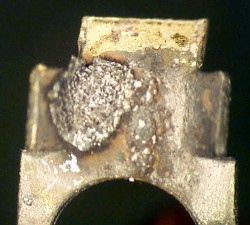
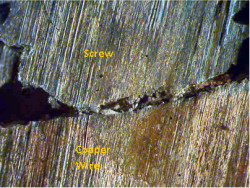
The connector was cross-sectioned and SEM-EDS analysis performed. The screws in the terminal block connector typically are tin plated copper clad iron. Pictures from the first connector, as shown directly below, show the results of extreme temperature elevation with black carbonization and melted housing. Also, the wire was missing in this connector. EDS spectral analysis revealed the inside shaft was plated with tin on brass. A micrograph of the shaft shows many cracks in the plating.

Vertical Cavity Surface Emitting Laser

Vertical Cavity Surface Emitting Laser

Gideon Analytical Laboratories received several VCSELs (vertical cavity surface emitting laser" with diminished light capacity over time for failure analysis. VCSELs are a type of semiconductor laser diode with laser beam emission perpendicular from the chip surface. The VCSEL has become of great importance in the optical communications field. Gideon Analytical Laboratories was tasked to diagnose the failing VCSELs.

Failure analysis commenced. The devices were tested on a curve tracer to determine whether any junction problems (junction inversion, leakage current, facet oxidation, etc.) were present; there was no leakage current detected by the curve tracer. The VCSELs were then enclosed in a hermetic T0-46 can with a slanted anti-reflective glass coating radiating in the region of 795 nanometers, which is pictured below.

BGA Failure Analysis on Static Transfer Switch

BGA Failure Analysis on Static Transfer Switch

Gideon Analytical Laboratories received one static transfer switch (STS) Main Logic printed circuit board (PCB) assembly with two chips onboard digital signal processor (DSP)’s that were non-functional. The thought was the DSPs may have ball grid array (BGA) solder joint integrity issues causing the failures.

Analysis ensued. The three DSPs were removed from the PCB and immersed into the green dye and the DSP was pried from the main circuit board to reveal any cracked solder BGAs. The pictures below show the front and back of the DSP; there were 67 solder balls that attached to the PCB more tenaciously than to the DSP when separated. There was no cracked BGAs nor evidence of poor solder joints.

Capacitor Terminal Crack

Capacitor Terminal Crack

Gideon Analytical Laboratories received 19 multilayered ceramic capacitors (MLCCs). MLCCs have a ceramic dielectric, a ceramic or lacquered coating, a metalized electrode, and connecting terminals. Ceramic capacitors, in particular, MLCCs, are ubiquitous in all kinds of electrical equipment. Some of the MLCCs Gideon received were to test quality control, some were to test process evaluation immediately after wave solder, and some were failures in the field. The objective was to determine where these failures were entering the product and the cause of the failures.

MOC101 Photocoupler

MOC101 Photocoupler

Gideon Analytical Laboratories received three failed Vishay MOC8101 isolating photocouplers for failure analysis. These photocouplers are components that transfer electrical signals between two isolated circuits by using light. Like the MOC8102, MOC8103, MOC8104, and MOC8105, the MOC8101 consists of a consisting of gallium arsenide infrared emitting diode optically coupled to a silicon planar phototransistor detector in a plastic plug-in DIP-6 package (http://www.vishay.com/docs/83660/moc8101.pdf) The MOC8101 were reported to have intermittent function, it was the goal of Gideon Analytical Laboratories to diagnose the cause of these failures.

Resistor Contamination on Axial-Lead Resistors

Resistor Contamination on Axial-Lead Resistors

Gideon Analytical Laboratories received three axial-lead resistors for failure analysis (pictured in the first picture directly below). A resistor is a passive two-terminal electrical component that implements electrical resistance as a circuit element. Their purpose is for creating a precise quantity of resistance for insertion into a circuit; they are typically constructed of metal wire or carbon and engineered to maintain a stable resistance value over a wide range of environmental conditions. Gideon Analytical Laboratories was tasked to identify the cause of failure in these resistors.

Varactor Diode GVD30601-001

Varactor Diode GVD30601-001

Gideon Analytical Laboratories received several GVD30601-001 super hyperabrupt junction tuning varactor diodes with a latent failure mechanism over time. A varactor diode is a P-N junction diode that changes its capacitance and the series resistance as the bias applied to the diode is varied. Hyperabrupt tuning varactor diodes offer a large change in junction capacitance over a small tuning voltage range. Varactors are operated in a reverse-bias state, like a Zener diode. Thus, no current flows, but since the thickness of the depletion zone varies with the applied bias voltage, the capacitance of the diode can be made to vary. The depletion region thickness is proportional to the square root of the applied voltage; capacitance is inversely proportional to the depletion region thickness. Thus, the capacitance is inversely proportional to the square root of the applied voltage. The goal was to find the cause if the GVD30601-001 varactor failures.

Light Sockets MR16

Light Sockets MR16

Gideon Analytical Laboratories received to MR16 sockets for a comparison between the current model and a new candidate. The MR16s are a type of bi-pin lamp fitting. Bi-pin lamp fittings are for use in incandescent (especially halogen) and some fluorescent lights. Gideon Analytical Laboratories not only helps companies identify the causes of failures in the manufacturing process and the field but in this case, can help identify positives and negatives about a type of design or types of materials.

Op-Amp Failure Analysis

Op-Amp Failure Analysis

Gideon Analytical Laboratories received four Maxim 4252EUA dual op-amps for failure analysis. Operational Amplifiers or Op-amps are one of the basic building blocks of analog electronic circuits. Operational amplifiers are linear devices that have all the properties required for nearly ideal DC amplification and are therefore used extensively in signal conditioning, filtering or to perform mathematical operations such as add, subtract, integration and differentiation. It was reported the fails indicated no output. Five devices were supplied to help in the layout and electrical testing.

Resistor Contamination on Failed 510K

Resistor Contamination on Failed 510K

Gideon Analytical Laboratories received two failed 510K, two used 510K operating for about 3 weeks, and two virgin resistors for failure analysis. A resistor is a component of a circuit that resists the flow of electrical current. It has two terminals across which electricity must pass, and it is designed to drop the voltage of the current as it flows from one terminal to the other. Resistors are primarily used to create and maintain known safe currents within electrical components. The epoxy coating on the failed and used resistor was not as hard as the virgin part. The coating peeled easily and exposed the underlying aluminum metal on the alumina shaft. Therefore, the first suspicion is that something in the process is altering the coating integrity of the epoxy on the resistor. All the resistors were examined for contamination on the epoxy coating by using SEM-EDS to identify any detrimental elements. There is a chloride peak on top of the coating. Normally, chlorides do not attack the epoxy coating nor do they diffuse through the coating to the aluminum metal. As these chlorides were found on the top of the coating, the coating was marked as to the location. SEM-EDS identified chloride. The Si is coming from residual silicates used as binders epoxy coating and the silicone potting material. The chloride was coming from a cleaning product before conformal coating. Gideon Analytical Laboratories can solve all kinds of contamination issues with components and IC. Use Gideon the next time your company needs IC or component failure analysis.

Failure Analysis of EDN337N FET

Failure Analysis of EDN337N FET

Gideon Analytical labs received one FDN337N-channel FET for failure analysis. The Drain-Source was reported shorted. Super SOTTM-3 N-Channel logic level enhancement mode power field effect transistors are produced using Fairchild’s high cell density DMOS technology. This very high-density process is specially tailored to minimize on-state resistance.

These devices are particularly suited for low voltage applications in notebook computers, portable phones, PCMCIA cards, and other battery powered circuits where fast switching and low in-line power loss are needed in a very small outline surface mount package.

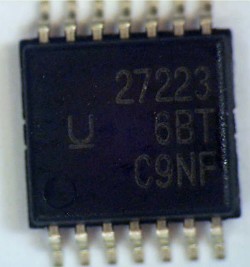
Synchronous Buck Driver TI UCC27223PWP Failure Analysis

Synchronous Buck Driver TI UCC27223PWP Failure Analysis

Gideon Analytical Laboratories received two failed TI UCC27223PWP and three vintage devices for comparison. Two 14 pin Dip TI UCC27223PWP functional failures were sent from assemblies. The UCC27223 is a high-speed synchronous buck driver for thigh-efficiency lower-output voltage designs. Using PredictiveGate Drive (PGD) control technology, these drivers reduce diode conduction and reverse recovery losses in the synchronous rectifier MOSFET(s). The UCC27223 has an enable pin that controls the operation of both outputs. A logic latch, which keeps both outputs low until the first PWM input pulse comes in, is included. The RDS(on) of the SR pull-down sourcing device is minimized for higher frequency operations. This closed loop feedback system detects body-diode conduction and adjusts dead time delays to minimize the conduction time interval. This virtually eliminates body-diode conduction while adjusting for temperature, load-dependent delays, and for different MOSFETs. Precise gate timing at the nanosecond level reduces the reverse recovery time of the synchronous rectifier MOSFET body-diode, reducing reverse recovery losses seen in the main (high-side) MOSFET. The lower junction temperature in the low-side MOSFET increases product reliability. Since the power dissipation is minimized, a higher switching frequency can also be used, allowing for smaller component sizes.

SCR FP25001P1 or Thyristor Failure Analysis

SCR FP25001P1 or Thyristor Failure Analysis

Gideon Analytical Laboratories received one SCR (silicon-controlled rectifier) module FP25001P1 for failure analysis.

An SCR consists of four layers of alternating p- and n-type semiconductor materials, NPNP or PNPN structures. The three P-N junctions are labeled J1, J2 and, J3, for the three terminals. Silicon is used as the intrinsic semiconductor, to which the proper dopants are added. The junctions are either diffused or alloyed (an alloy is a mixed semiconductor or a mixed metal). The planar construction is used for low-power SCRs (and all the junctions are diffused). The mesa-type construction is used for high-power SCRs. In this case, junction J2 is obtained by the diffusion method, and then the outer two layers are alloyed to it since the PNPN pellet is required to handle large currents. It is properly braced thyristor. The term “thyristor” applies to the larger family of multilayer devices that exhibit bistable state-change behavior, that is, switching either on or off.

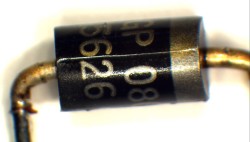
Failure Analysis on 1N5626GP Diode

Failure Analysis on 1N5626GP Diode

Gideon Analytical Laboratories received one failed 1N5626GP diode and several good ones for comparison.  According to a Wikipedia post, a p–n junction diode is made of a crystal of a semiconductor, usually silicon, but germanium href=“https://en.wikipedia.org/wiki/Gallium_arsenide">gallium arsenide are also used. Impurities are added to it to create a region on one side that contains negative charge carriers (electrons), called an n-type semiconductor, and a region on the other side that contains positive charge carriers (holes), called a p-type semiconductor. When the n-type and p-type materials are attached together, a momentary flow of electrons occurs from the n to the p side resulting in a third region between the two where no charge carriers are present. This region is called the depletion region because there are no charge carriers (neither electrons nor holes) in it. The diode’s terminals are attached to the n-type and p-type regions. The boundary between these two regions called a p–n junction is where the action of the diode takes place. When a sufficiently higher electrical potential is applied to the P side (the anode) than to the N side (the cathode), it allows electrons to flow through the depletion region from the N-type side to the P-type side. The junction does not allow the flow of electrons in the opposite direction when the potential is applied in reverse, creating, in a sense, an electrical check valve.

PCB Failure Analysis

PCB Failure Analysis

Gideon Analytical Laboratories received the main PCB that had a fire in one section of the board. The objective was to find the cause in an already established product line.

This PCB had some copper deposition problems at level two copper. The deposition was seen under the diode mounted to the PCB. The deposited copper also was responsible for an internal short within the PCB. The internal short caused the electrolytic capacitor to heat up and vent toward the PCB surface onto a hot trace line. This, in turn, caused the PCB to ignite as the electrolyte caught on fire.

Photocoupler Avago HCPL 0630 Failure Analysis

Photocoupler Avago HCPL 0630 Failure Analysis

Gideon Analytical Laboratories received one failed photocoupler, an Avago HCPL 0630 in an 8 pin DIP SOIC -8 package. The reported failure came from the field after approximately 1.5 years of operation.

The HCPL-0630 optocoupler is an optically coupled logic gate that combines a GaAsP light emitting diode and an integrated high gain photo detector. An enable input allows the detector to be strobed. The output of the detector IC is an open collector Schottky-clamped transistor.

Photocoupler Vishay IL420 Failure Analysis

Photocoupler Vishay IL420 Failure Analysis

Gideon Analytical Laboratories received one failed photocoupler, a Vishay IL 420, for failure analysis along with two virgins (unused) optocouplers for comparison.

The basic function of a Photo Coupler is to have electronic isolation, including potential isolation (as in the case of the transformer) in an electrical circuit. Devices of the Photo Coupler family include Photo Transistor, Photo Darlington Transistor, Photo Triac and OPIC. These devices have the characteristics of excellent isolation, high CTR, compact package, high-speed operation, low decay and unit control function not being influenced by field effects.

ST Microelectronics BTA06 Triac Failure Analysis

ST Microelectronics BTA06 Triac Failure Analysis

Gideon Analytical Laboratories received one failed ST Microelectronics BTA06 Triac a TO-220AB package. The device was reported to have failed post-burn-in.

This  Triac is suitable for general purpose AC switching according to ST Micro. They can be used as an ON/OFF function in applications such as static relays, heating regulation, induction motor starting circuits or for phase control operation in light dimmers, motor speed controllers. The specially recommended for use on inductive loads, thanks to their high commutation performances. By using an internal ceramic pad, the BTA series provides voltage insulated tab (rated at 2500 VRMS) complying with UL standards.

Fairchild RFP40N10 MOSFET Failure Analysis

Fairchild RFP40N10 MOSFET Failure Analysis

Gideon Analytical Laboratories received three-failed Fairchild RFP40N10 power MOSFETs. All the terminals were shorted. A MOSFET is a voltage-controlled power device. If no positive voltage is applied between gate and source, the MOSFET will be non-conducting. If a positive voltage is applied to the gate an electrostatic field between it and the rest of the transistor will be produced. This positive gate voltage will push away the holes inside the p-type substrate and attracts the movable electrons in the n-type regions under the source and drain electrodes. This produces a layer just under the gate’s insulator, silicon dioxide, through which electrons migrate and move from source to drain. This region is known as the channel. The positive gate (doped polysilicon) voltage,therefore, inverts the p-type region and creates a channel in the top layer of material between the gate oxide and p-Si. Increasing the voltage will widen the channel and thus, increase the amount of current that can flow through the channel. This is called an enhancement mode MOSFET.

MLC Capacitor Failure Analysis (MLCC)

MLC Capacitor Failure Analysis (MLCC)

Gideon Analytical Laboratories received one failed multilayer ceramic capacitor for failure analysis. The image below is from Wikipedia. It shows the standard metallurgy for MLCCs.

The capacitor was mounted to the PCB and showed no signs of external damage. The capacitor was removed from the PCB and tested. The leakage current was too high for a capacitor of this size. The capacitor failure analysis revealed by a cross-section that the capacitor had thermal cracks extending from one side to the other. These types of cracks are caused by excessive heat either by the circuit or the soldering process. It was late found that the crack was caused by an operator installing the MLCC to the PCB because it was reworked. A video of how these MLCCs are made can be seen at the following link.  $2 Gideon Analytical Laboratories can find the problem quickly so that corrective action can be made promptly. If you need failure analysis on capacitors, call us at 845-255-5356.

Metal Failure Analysis

Metal Failure Analysis

Gideon Analytical Laboratories examined the extrusion marks on the tungsten IC probes wires versus a Monel K500 IC probes via SEM. MONEL K500 is a nickel-copper alloy, precipitation hardenable through additions of aluminum and titanium. MONEL K500 retains the excellent corrosion resistant characteristics of 400 and has enhanced strength and hardness after precipitation hardening when compared with 400. Alloy K500 has approximately three (3) times the yield strength and double the tensile strength when compared with 400. MONEL K500 can be further strengthened by cold working before the precipitation hardening.

Optocoupler Fairchild QTC H11N1 Failure Analysis

Optocoupler Fairchild QTC H11N1 Failure Analysis

Gideon Analytical Laboratories received several Fairchild QTC H11N1s, a high-speed logic optocoupler, in 6-pin plastic DIPs. The devices were reported as some good, some intermittent and some not working in the application.

The main function of an opto-isolator is to block high voltages and voltage transients, so that a surge in one part of the system will not disrupt or destroy another part of the circuit. Opto-couplers allow a signal to be sent in digital (some analog) between circuits. This isolation used to take place using isolation transformers via inductive coupling between input and out sides separated by a dielectric. Four of the date codes were 9607E and one 9942K. All the optocouplers were tested under conditions that corresponded to the application; these failed, however, when the current was increased, the output received the signal. Several of the failed devices had reverse leakage current on the diode (input) as measured on a curve tracer.

IR FR22ON MOSFET Failure Analysis

IR FR22ON MOSFET Failure Analysis

Gideon Analytical Laboratories received a failed IR FR22ON MOSFET within DC-DC converter. All the MOSFETs were shorted on all terminals. The MOSFETs were tested by lifting the gate and source wires from the circuitry. The Idss leakage for a good IR MOSFET is typically around less than 1 nano-amp. All the good MOSFETs tested were around .8 nano-amps, BVdss 220V, Vgsth 3.6, Igss <100nA. This IR FR220N has thermal damage. This typically overwhelms the junctions with current (heat) and the weakest hex cells are destroyed first. The black areas are produced by the anaerobic carbonization of the epoxy packaging.

PWM Failure Analysis on MuRata PS Converter

PWM Failure Analysis on MuRata PS Converter

Gideon Analytical Laboratories received pulse width modulators PWM failing in a MuRata Ps DC-DC converter. The PWM was removed from the encapsulation and tested. Several I/O pins were either open or showed no connection to the circuitry of the IC. The PWM CS51022AG is a fixed frequency current mode controller family provides the necessary features for DC−DC primary side control. In addition to low startup current (75A) and high frequency operation capability, the CS51022A includes over-voltage and under-voltage monitoring, externally programmable dual threshold over-current protection, current sense leading edge blanking, current slope compensation, accurate duty cycle control and an externally available 5.0 V reference. The CS51022A has a sleep mode with 100 A maximum IC current consumption. The CS51022A is in a 16 lead narrow body SOIC package.

Relay Contamination

Relay Contamination

Relays are very susceptible to contamination because the leads are made of copper and vulnerable to corrosion and leakage current if not protected from the environment.

The liquid shown here was thought to have come from the flux residue and, therefore, an organic analysis FTIR was required as opposed to inorganic XRF. However, the liquid was acidic in nature and XRF was employed. The material was a filled, glass fiber reinforced material containing a phosphorus species along with an antimony/bromine fire retardant package. The original formulation likely contained antimony oxide and a poly-brominated organic, such as diphenyl ether or a tetra-bromo BPA polyester or polycarbonate. The bromic acid has leached out of the fire retardant material. This material is not compatible with most electronic circuits or components.

Tantalum Capacitor Failure From Moisture Ingress

Tantalum Capacitor Failure From Moisture Ingress

Gideon Analytical Laboratories received four tantalum capacitors identified as failing from two vendors, Kemet (T491B225K035AT) and AVX TAJB225K035RNJ. A tantalum capacitor is a type of electrolytic capacitor. It is constructed of a pellet of tantalum metal as anode, covered by an insulating oxide layer that forms the dielectric (manganese dioxide), surrounded by conductive material as a cathode (carbon with a silver epoxy interface). Tantalum electrolytic capacitors exploit the tendency of tantalum to form a non-conductive protective oxide surface layer. A tantalum capacitor consists of tantalum powder pressed into a pellet shape as one “plate” of the capacitor, with the oxide as a dielectric, and an electrolytic solution or conductive solid as the other “plate”. The dielectric layer thus can be very thin. This gives tantalum capacitors an advantage over electrolytic capacitors in having a high capacitance per unit volume and weight.

VCSEL Diode Failure Analysis

VCSEL Diode Failure Analysis

Gideon Analytical Laboratories received several VCSELs (vertical-cavity surface-emitting laser) with diminished light capacity were submitted for failure analysis. A VCSEL is a type of semiconductor laser diode with laser beam emission perpendicular from the top surface, contrary to conventional edge-emitting semiconductor lasers which emit from surfaces formed by cleaving the individual chip out of a wafer. Thus, all the light is emitted from one spot, the laser aperture. The devices were tested on a curve tracer to determine whether any junction problems (junction inversion, leakage current, facet oxidation, etc.) were present. There was no difference in the curve trace of a good and a failed device.

Voltage Regulator 5962-89981 Failure Analysis

Voltage Regulator 5962-89981 Failure Analysis

Gideon Analytical Laboratories received two linear adjustable monolithic silicon 5962-89981 adjustable positive regulators both with no measurable output for failure analysis. A third device was sent with a questionable output. This is a three terminal positive adjustable voltage regulator designed to provide 1.5A with higher efficiency than conventional voltage regulators. The device is designed to operate to 1 Volt input to output differential and the dropout voltage is specified as a function of load current. The device is in a TO-257 hermetic package where Military applications require small size and high reliability.

AS169 PHEMT Failure Analysis

AS169 PHEMT Failure Analysis

Gideon Analytical Laboratories received several failed AS169 PHEMT DC 2676 transistors on several PCBs (pseudomorphic high electron mobility transistor) is a field-effect transistor incorporating a junction between two materials (GaAs and AlGaAs) with different valence and conduction bands (bandgap is the difference between the two bands for the two materials) as opposed to a doped region where a MOSFET structure would be formed. The thickness of the one material is stretched such that the bandgap opens more than it normally would which allows better performance because the lattice does not bunch up when the two materials are forced together.

BGA Voiding

BGA Voiding

X-Ray Radiography Inspection

This report contains images taken of the BGAs on the two boards provided. There are no significant defects present, however, significant voiding is present throughout the two parts. The last image shows a BGA analysis performed on one of the worst areas of voiding. The analysis shows voiding greater than 15%, but less than 20%.

When run, this feature shows voiding in the solder joints as well as background features such as traces and vias, all within the same image.

Counterfeit 476E Tantalum Capacitors

Counterfeit 476E Tantalum Capacitors

Gideon Analytical Laboratories receives many counterfeit parts come in from Asia and China. Constant testing and evaluation with radiography, cross-sectioning, and electrical measurements and microscopy provide the means to identify these components flooding our markets.

Tantalums capacitors are made of tantalum metal which acts as an anode, covered by a layer of oxide which acts as the dielectric, surrounded by a conductive cathode. The use of tantalum allows for a very thin dielectric layer. This results in a higher capacitance value per volume, superior frequency characteristics compared to many other types of capacitors and excellent stability over time. Tantalum capacitors are generally polarized, which means that they may only be connected to a DC supply observing the correct terminal polarity. The downside to using tantalum capacitors is their unfavorable failure mode which may lead to thermal runaway, fires and, small explosions, but this can be prevented through the use of external failsafe devices such as current limiters or thermal fuses. These surface mount tantalum capacitors claim much less space on the printed circuit board and allow for greater packing densities.

Cracked Glass Diode in a Display Socket: Failure Analysis

Cracked Glass Diode in a Display Socket: Failure Analysis

Gideon Analytical Laboratories received Wamco Display Socket 4160001-1 for failure analysis. The device had a reported open diode on pin G.

This display socket is encapsulated in a plastic housing filled with a silicone rubber filler to stabilize movement of the diodes. The diodes are hermetically sealed in glass and position via plastic at one end and a socket located at the bifurcation line. The electrical data indicated the diode was open when initially measured but was intermittent when moved.

Failure Analysis on Metallized Film Capacitor

Failure Analysis on Metallized Film Capacitor

Gideon Analytical Laboratories received one M83421/01-5191S film capacitor with lower than expected capacitance for failure analysis. This device is a fixed metalized paper-plastic dielectric hermetically sealed capacitor in a metal can. Metalized film capacitors are made of two metalized films with plastic film as the dielectric. A very thin vacuum deposited aluminum, tin or zinc metallization is applied to one or both sides to serve as electrodes. This configuration has “self-healing” properties, in that dielectric breakdowns or short circuits electrodes do not necessarily lead to the destruction of the component. With this design, it is possible to make a high-quality product with “zero defects” and to produce wound capacitors with large capacitance values. The disadvantage of metalized construction is its limited current surge rating. The self-healing aspect comes into play when a voltage is applied to the capacitor; the shorted areas will burn away by the voltage. Typically, there are no long-term shorts in film capacitors. The capacitance was measured at 8.7pF instead of the expected .22uF.

FTIR Identification of Contamination

FTIR Identification of Contamination

Gideon Analytical Laboratories received several samples thought to a contain silicone contaminate that prevented adhesion on the metal substrate. The analysis was performed using micro-FTIR analysis for the presence of silicone in three samples.

The samples were first examined under a microscope to identify the FTIR.

The contaminate is a dimethyl siloxane preventing adhesion.

Gideon Analytical Laboratories can save your company by identifying the materials that cause problems. We have many analytical techniques, instruments and years of experience in the electronic and chemical industries. Call with your analysis.

IC BSP 77 HITFET Failure Analysis

IC BSP 77 HITFET Failure Analysis

Gideon Analytical Laboratories received two BSP 77 HITFET devices with resistive shorts. The HITFET is a highly integrated temperature protected FET low-side switch which provides protection from short circuits, overloads, voltage surges, open circuits, excessive temperature, and ESD. These low-side switches are versatile power transistors specially designed for automotive and industrial applications. Their built-in intelligence and protective features offer improved performance and reliability over discrete components.

The die is covered with a polyimide over glassivation on top of the trace lines. The polyimide is destroyed. The yellow arrow is melted glass at the failure site. There are two circuits off the gate wire: the EDS protection and the drive unit. The failures occurred in the region adjacent to the gate pad. There are several junctions where over current is observed. The temperature on this device had to get hot in order to melt the polyimide.

LCD Sitronix ST7528 IC Controller Failure Analysis

LCD Sitronix ST7528 IC Controller Failure Analysis

Gideon Analytical Laboratories received three failed and three operating Sitronix ST7528 LCD controller/drivers mounted directly on glass and connected via a 24 pad polyimide flex circuit to an FRU controller card. The failed units had a date code 06114A*C3 on a white label, version 1.6.

These are the test point pads on NG1. These are output pads. There is an EOS (electrical overstress) under the glass just below the second rail.

Metallurgy Corrosion

Metallurgy Corrosion

Several screws were presented to Gideon Analytical Laboratories due to corrosion. The screws were analyzed with SEM-EDS. The micrograph indicates the spot where this screw was analyzed. Chloride was found on the spot where corrosion was found.

Gideon Analytical Laboratories can identify the source and cause of corrosion allowing the customer to implement the corrective action immediately.

Screw Micrograph

Screw Micrograph

screw-2

Screw EDS of Contaminate

MLCC Failures

MLCC Failures

Gideon Analytical Laboratories received several PCBs with MLCC capacitors mounted near the circuit board edge. The capacitors had a polyurethane conformal coating passing class 2 IPC-A-610 inspection. Several of the capacitors had less than 3000 ohms leakage current when measured on an IR meter. The coating was removed and the samples were potted and cross-sectioned for further analysis. The capacitor shown is typical of a lot of failures.

These are flex cracks caused by PCB flexing or bending. These types of failures most generally do not show any signs of stress on the outside margin area and, therefore, cannot be identified visually under the microscope. This failure is clearly a handling issue associated with installation.

Vishay MKT 1917 Film Capacitor Failure Analysis

Vishay MKT 1917 Film Capacitor Failure Analysis

Gideon Analytical Laboratories received three partial boards with four coupling Vishay MKT 1817 63V ERO 0225 film capacitor failures. After electrical measurements and considerable testing, the ESR was found to be the cause of the failure, however, what caused the ESR to elevate?

It was determined the packaging on the capacitor was not adequately protecting the terminal end from the outside environment. Moisture ingress elevated the ESR and with higher ESR, the higher the heat produced in the circuit. This capacitor was a replacement for another capacitor once used in the circuit. This capacitor had higher ESR than its predecessor. Thus, with the higher ESR to begin with, the moisture and ionic ingress through the package and the ripple current being used in the application this lead to thermal failures.

Wima versus Vishay Film Capacitor Comparison

Wima versus Vishay Film Capacitor Comparison

Film capacitors are widely used because of their superior characteristics. This capacitor type is not polarized, which makes them suitable for AC signal and power use. Film capacitors can be made with very high precision capacitance values, and they retain that value longer than other capacitor types. This means that the aging process is generally slower than in other capacitor types, such as the electrolytic capacitor. Film capacitors have a long shelf and service life, and are very reliable, with a very low average failure rate. They have low ESR (Equivalent Series Resistance), low self-inductance (ESL), and as a result very low dissipation factors. They can be made to withstand voltages in the kilovolt range and can provide very high surge current pulses. A special class of film capacitors, which is called power film capacitors is available, and this class of film capacitors can withstand reactive power in excess of 200 volt-amperes. These capacitors may have special screw-type terminals which can withstand high currents. Screw-type terminals replace soldered joints because power film capacitors sometimes need to be changed in the field. Unfortunately, their superior electrical properties and stability come at a price. Film capacitors are bulkier than their electrolytic equivalents, which means that limited SMT (Surface Mount Technology) packages are available. They can also burst into flames if overloaded, but this characteristic is somewhat common among different capacitor types. Read more

Insitu Process Contamination

Insitu Process Contamination

This filter is used in a water filter system for water consumption. The filters were plugging up rather fast with the pink material shown in the photograph below.

Since these problem types are unknown, one must choose the appropriate analysis method for material identification. Methods used are Fourier transform infrared spectroscopy (FTIR), X-Ray Diffraction (XRD) and Gas Chromatography-mass Spectrometry (GCMS)) since the filters were designed to filter out organics and inorganics. The FTIR, as well as GCMS, identified the organic portion as cellulose nitrate and the inorganic portion by XRD was identified as a yellow iron oxide hydrate.

Copper Wire With Nickel Plated Pad

Copper Wire With Nickel Plated Pad

This is a picture of a copper wire that used to have tin plating and nickel plated pad. The wire was running 120V at 60Hz. The connection was placed in a non-hermetical container where chlorides in the atmosphere were high. Over time the chlorides attacked the exposed copper and undermined the tin plating on the copper wires. The resistance in the wire increased, the copper arced due to this increased resistance and the socket assembly failure to corrosion.

Micro-hairs of Copper Oxide on Nickel Substrate

Micro-hairs of Copper Oxide on Nickel Substrate

This a micrograph of copper oxide deposits on nickel plating. The copper oxide is inhibiting the electrical conduction of a 120V light on terminals of a light bulb. This is an environmental failure stemming from the fact that the exposed copper on another part of this circuit, deposited copper oxide by arching, and this, in turn, caused an eventual loss in conduction to the bulb.

This arcing happens when low-level contaminants are present and concentrate over time. Once a copper oxide barrier forms, the resistance increases and arcing soon occurs on the deposited surface. This could end in either a fire or no conduction depending on environmental conditions existing at the time of the failure. This failure occurred in a museum which one would think had minimal contaminants. The analysis was performed on an SEM-EDS Gideon Analytical Laboratories has the capability and expertise to help clients from a variety of unrelated fields to understand the nature of environmental failures caused by excessive cleaning fluids, pressure washers, light exposure, accumulated chemical effects, and electrical conditions. We have been analyzing failures for over 30 years. We have EE, chemists, component, and analytical people to do the job right. Call us.

Failure Analysis on Microwave Capacitors

Failure Analysis on Microwave Capacitors

The analysis was performed on ten failed microwave capacitors. They were Samwha vintage 2100VAC .65uF with 3 percent tolerance with a maximum temperature rating of 85oC. All the capacitors were tested for shorts or opens. The resistance of the integrated resistor was measured also. None of the integrated resistors failed. They all varied from 9.75-M ohms to 10.85M ohms. Many of the capacitors saw considerable heat. This was evident by the bulging deformed metal can housing. When several of these capacitors were taken apart the dielectric fluid burst out under pressure. In order for such pressure to exist internally, the dielectric fluid has broken down forming a gas, the volume of the byproducts is larger than the initial conditions or another gas was produced by another means. All capacitor failures were identical in that the burned spot is always at the top of the aluminum foil, as revealed in the picture above. The presence of a residual black material on the rivet was detected. This material is coming from the encapsulation used on the surface of the resistor. When the black material is analyzed by SEM-EDS, it was found that all the black material contains copper and iron. There exists a material incompatibility problem between the integrated resistor encapsulate and the dielectric fluid.

EOS of Signal Diode

EOS of Signal Diode

Gideon Analytical Laboratories received two integrated load switches and two small signal diodes for analysis. The integrated load switches are particularly suited for compact power management in portable electronic equipment where 2.5V to 8V input and 2.8A output current capability are needed. They have an operating voltage range 1.2V-20.V. The signal diodes are non-linear semiconductor devices generally used in electronic circuits, where small currents or high frequencies are involved such as in radio, television and digital logic circuits. The goal was to diagnose the cause of failure for all of these devices.

Strain Gauge Resistance Changes

Strain Gauge Resistance Changes

Gideon Analytical Laboratories received an industrial scale to analyze possible manufacturing defects and potential problems that affect “calibration” weight for long-term reliability. Many of these scales are used in heavy industry or veterinary applications. These scales also come in a variety of categories for different uses, including platform, drum, cylinder, and crane, among others.

There was some residual contamination that sat on top of the strain gauge but under the conformal coating, which can be seen in the picture at the top left. This appeared to be an electronic grade silicone coating. It had very poor adhesion to the substrate surface. Any moisture ingress (via humidity) would alter the resistivity on the strain gauge.

Tin Whiskers

Tin Whiskers

Gideon Analytical Laboratories performed analysis on several Melexis US2881 Sensors when the designer found shorts on the returned product from the field.

Melexis US2881 sensors are bipolar Hall-effect switches designed in mixed signal CMOS technology. They have a wide voltage operating range from 3.5V to 24V, have high magnetic sensitivity, and a chopper-stabilized amplifier stage, and are suitable for automotive or consumer applications.

Analysis revealed tin crystals (whiskers) spread throughout the top and bottom of the PCB, shorting out the MOSFET as well as the Hall sensor. Micrograph (left) and SEM-EDS analysis confirmed the presence of tin whiskers causing a short in both positive and negative leads. The tin whisker growth took place over several days to develop without voltage and with conditions known to promote growth.

Phototransistor Failure

Phototransistor Failure

Gideon Analytical Laboratories received a failed SFH 320 optocoupler in a dual S0-8 package for failure analysis. Optocouplers can be used in many applications, including phototransistor, phototriac, or photodarlington outputs, in a range of through-hole and surface-mount package types. Many are digital optocouplers are used in the automotive industry. They come in a variety of AC and DC configurations, have high noise immunity, and are high temp devices. Two functionally good optocouplers were supplied for comparison. The goal was to find the cause of the failure.

Fire on Multilayer PCB

Fire on Multilayer PCB

Gideon Analytical Laboratories received a PCB that had a fire in one section of the board. These PCBs can provide high-performance 10G visibility for network monitoring tools in all parts of a fiber network. They feature to 24 SFP+ ports supporting 10G and 1G Ethernet (10GbE and 1GbE) and up to four RJ-45 copper Ethernet ports. The objective was to find the cause of the fire on the board, in an already established product line.

Optocoupler Failures

Optocoupler Failures

Gideon Analytical Laboratories received two failed photocouplers for failure analysis. These photocouplers feature a high isolation voltage, high-speed switching, and high collector to emitter voltage. They are used in many types of applications, including power supply, telephones, and fax machines. The optocoupler was electrically tested; there was a short on both input diodes. The goal was to determine the cause of this failure.

After curve trace tests were performed, both failed devices were immersed in a low surface tension dye penetrant This is a modified Mil-Std 1014.2 with alterations reflecting current processing. After several other tests, these were confirmed as hard shorts. Any dye penetration constitutes a failure and demonstrates that moisture could have ingress the package of these failures.

Environmental Contamination of PCBs

Environmental Contamination of PCBs

Gideon Analytical Laboratories received three central air conditioner hubs. These air conditioners can are built for commercial or residential use. Depending on their SEER ratings, they run between 66dB and 72dB and use Puron refrigerant. The hubs had corrosion on the PCB and had the appearance that some liquid flowing between the insulation and wire leading into the cavity. The goal was to discover the identity and cause of the corrosion.

Poor Process Control Lead to Over Current Failure

Poor Process Control Lead to Over Current Failure

Gideon Analytical Laboratories received several printed circuit boards (PCB) with fire damage on one and electrical overstress on the LTC4258CGW module when received. One good unit was provided for comparison. The objective was to find the cause and access the risk to the customer.

The LTC4258 can operate autonomously or be controlled by an I2C serial interface. Fault conditions are optionally signaled with the INT pin to eliminate software polling. External power MOSFETs, current sense resistors and diodes allow easy scaling of current and power dissipation levels and provide protection against voltage and current spikes and ESD events.

Triac Failures

Triac Failures

Gideon Analytical Laboratories received one failed optocoupler, along with two optocouplers for comparison. As a type of isolator favored by manufacturers, photocouplers

serve as noise protectors in many electronic devices. This optocoupler has a minimum isolation voltage of 5300 Vrms, a typical input voltage of 1.16 V, and a peak output voltage of 600V. The goal was to identify the cause of the failure.

The optocoupler was electrically tested. The input functioned normally with VF 1.2 Vat 10 mA. The IR was .08 uA. There were no mechanical marks on the part, and it had a normal curve trace. However, a short was confirmed from pin 5 to both pins 4 and 6. When 15 V was applied to either pin 4 or 6 and measured at pin 5, a 42-ua leakage current resulted. The failure was baked out 125C for two hours. The part was re-measured to find no connection between any of the pins 4, 5, or 6. As seen in the picture at the top left, the 6-pin dip is constructed by having an epoxy encapsulation over a plastic sarcophagus housing two identical inverse parallel-connected photosensitive triacs. The triacs are further encapsulated with an optical plasticizer.

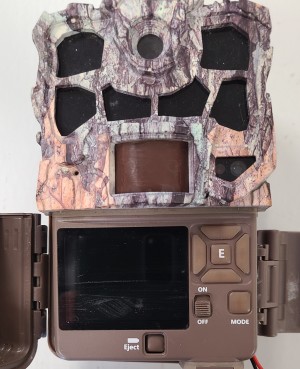
Manufacturing Failure

Manufacturing Failure

Gideon Analytical Laboratories received several PCB that opened up on several of the I/O metal dome pads.

The three black circles are the time, status, and menu pads. The metal domes came out when the two switches were separated. These buttons are connected to an output. The insulator cavity (the black spots) provides space for the metal dome. The metal dome makes contact when pushed from the top switch circuitry to the bottom switch shown later. The arrows point to conductor lost from switch 2 when the two switches were separated physically. The top arrow caused an open in the bottom circuit (shown by the arrow in the next picture).

Electrolytic Capacitor Failure

Electrolytic Capacitor Failure

Gideon Analytical Laboratories received a single capacitor for failure analysis. The capacitor had a capacitance of 22µF, a voltage rating of 400 V, was ROHS compliant and had a vented bottom and the wound was exposed. The goal was to determine the cause of the failure.

The capacitor sleeve was not cracked and bulging was not apparent. This usually indicates the failure occurred during a minor period from onset of the pressure build up within the can. As can be seen in the picture at the top left, the anode has corroded through the aluminum tab. The lead consists of the tin plated copper clad iron, brazed to an aluminum socket, which consists of a shank and aluminum tab. The gray material on the lead is aluminum hydroxide, the by-product of corrosion. The silver colored material is aluminum. The light brown material is the solute that has precipitated out of the electrolyte solution. There was solvent on the wound circumference.

PCB with Amplifier Failed from EOS

PCB with Amplifier Failed from EOS

Gideon Analytical Laboratories received a single MA COM MAAPSS0096 1 watt power amplifier for failure analysis. The device was thought to have some impedance issues.

The device was still attached to PCB on arrival, as displayed in the picture at the top left. The device was removed from the PCB and tested to find any indication of the condition of the internal circuitry. The MAAPSS0113 is a three stage power amplifier designed for Digitally Enhanced Cordless Telephone applications. The power amplifier is available in a lead-free 3 mm 12-lead PQFN plastic package. The MAAPSS0113 features an integrated power enable pin (5) for accurate ramp control and a separate power mode pin (2) for current savings in a low power mode state. Both control pins operate with 1.7 V logic. A voltage compensation circuit is also included for applications where the amplifier supply voltage is not regulated and is directly connected to the battery.

PCB Poor Solder Lead to EOS MLCC Fracturing

PCB Poor Solder Lead to EOS MLCC Fracturing

Gideon Analytical Laboratories received two 0805 MLCC capacitors mounted on daughter boards and several good capacitors for comparison. One capacitor mounted on a PCB had multiple cracks.

The pictures supplied indicated several horizontal cracks. The capacitor was cleaned and cut from the remainder of the PCB and mounted for horizontal to the PCB.

After analysis the conclusion was a combined affect of terminal fracturing and poor soldering wetting lead to over heating which in turn caused thermal cracks that lead to the EOS.

MLCC Cracking

MLCC Cracking

Gideon Analytical Laboratories received a PCB with possible failed capacitors in several positions. PCBs are used to mechanically support and electrically connect electronic components. They are used in almost every all but the simplest electronic devices, from GPS systems to laptops, from cell phones to microwave ovens. Several MLCC capacitors on this PCB had failed, and the goal of Gideon Analytical Laboratories was to diagnose the cause of the failure.

Process Contamination

Process Contamination

Gideon Analytical Laboratories performed failure analysis on one opened splitter module LPF-200 PCB encapsulated in the black urethane potting material and housed in plastic. The PCB was burnt in one spot, and in that spot, a cavity existed under the carbonized epoxy of the PCB adjacent to the PTH. The trace line had a number of craters strongly suggesting an “electromigration” of copper. In order for electromigration to occur with copper a voltage, an acid and medium (moisture) must be present.
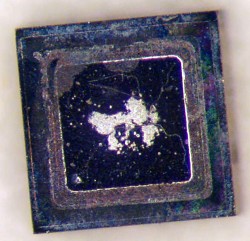
Electrolytic Internal Contamination

Electrolytic Internal Contamination

Gideon Analytical Laboratories performed failure analysis on good and bad Teapo electrolytic capacitors. A comparison leakage current test of the anode foil was set up. The leakage current over time is the best indicator as to whether the anode foil has an adequate crystal ratio of aluminum oxide forms to produce long-term reliability. The foil from the failed Teapo capacitors had multiple cracks like shown in the picture at the top left.

Multilayer Ceramic Capacitor (MLCC) Fracture

Multilayer Ceramic Capacitor (MLCC) Fracture

Gideon Analytical Laboratories performed failure analysis on several SM Syfer SM MLC Capacitors (also known as MLCC failures). The goal was to determine the root cause of these failures. Pictured on top left is the failed capacitor; it had an 11.5 Kohm resistance short.

The capacitors were cross sectioned. All cross sections of the new Syfer were in excellent quality. No voids, knit cracks, delamination, blow holes, or contamination was found. Electrode metal and dielectric thickness were well controlled. Half way through cross section of the width of the capacitor, crack and failure sites are revealed, as shown in the picture on the top right. The cracks spread in several directions. The one to the right continues to the right terminal and through the remainder of the body of the capacitor.

Process Contaminates Chlorides in Capacitors

Process Contaminates Chlorides in Capacitors

Gideon Analytical Laboratories received electrolytic capacitors for chloride analysis according to a prior analysis technique for determining the presence of chloride. The chloride analysis technique was developed because chlorine is a known catalytic corrosive element on aluminum.

The analysis was performed using an SEM-EDS system giving elemental analysis in relation to the intensity of the element at a specific wavelength or energy level (Kev). Since Kev (energy levels) for specific elements do not change, these are used to identify the elements in the sample. One of many SEM-EDS spectra pictures is at the top right. The analysis was performed on the tab, the lead, the fillet, the shank and the stitching where anode foil attaches.

Multilayer Ceramic Capacitor

Multilayer Ceramic Capacitor

Gideon Analytical Laboratories received 100 capacitors and directed to analyze them via cross-sectional analysis. Capacitors store charges and frequently appear on PCBs. There are many types of capacitors; electrolytic capacitors are tantalum capacitors are fairly common. The goal was to discover any abnormalities or determine if there were no abnormalities.

Each capacitor was cross-sectioned and observed 15 to 20 times under 40-72x magnification during the sectioning process. At some point during the cross-sectioning process, pictures were taken to depict the internal quality of the ceramic structure and any cracks (mechanical, knit, Kirkendall voiding or other defects) that may be present.

Shorted PX6A07 Silicon Rectifiers

Shorted PX6A07 Silicon Rectifiers

Gideon Analytical Laboratories received several shorted PX6A07 silicon rectifiers for failure analysis. Two good devices were provided for reference and comparison. A semiconductor diode is a crystalline piece of semiconductor material with a p-n junction connected to two electrical terminals. It conducts in the forward direction and is blocked in the reverse direction.

The good diodes were tested for conformance to the manufacturer’s specification. The good diodes performed per specification or exceeded electrical parameters listed. The failed diodes were electrically dead shorts.

Silicon Rectifier PX6A07

Silicon Rectifier PX6A07

This is a 6 amp plastic encapsulated silicon rectifier (PX6A07). Several of these high current diodes failed in the application.

The arrow points to the spot of one of the failures on one device after the epoxy and copper lead frame was removed.

The picture on the right is the anode. In the middle is the copper contact and the ring is actually the contact via solder to the P+ region of the die. There is a glass oxide extending from the sides of the die inward to meet the P+ region. Under the glass oxide, there is a P-type guard ring(s), which do not invert when the P+ (anode) is powered. These isolated diffused P rings break down if the voltage is excessive (beyond the specification). The P rings prevent the voltage from extending laterally to the die edge.

Stranded Wire With High Resistance

Stranded Wire With High Resistance

Gideon Analytical Laboratories received two 42-inch cables. One cable labeled with a mark where an intermittent open occurred and the other a new cable for comparison. Radiography cannot reveal any anomalies. Resistive measurements were taken along the wire to determine the location of the high resistance. The polypropylene was removed and several wires were inspected for holes or mechanical damage (kinks, exceeding bend radius, cuts, scoring, etc.) to the outer insulation. There was no damage found on the insulation. An examination of the interior cables revealed copper strands kinked inside the insulation, as illuminated in the SEM micrograph below.

Polymeric O-ring Identification

Polymeric O-ring Identification

Gideon Analytical Laboratories received three contaminated Buna-N diaphragms and several new ones for reference. These Buna-N diaphragms have a variety of applications, including in submersible level transmitters, actuary assemblies, air operated diaphragm pumps, and manual loading regulators. The goal was to identify the contamination and pinpoint its cause.

Upon examination under a stereo-zoom microscope, it was found that the surface of the sample contains a thick layer of a gel-like material. The gel had a brown tincture and fluoresced under black light. All three diaphragms were contaminated with this gel, which is pictured at the top left. The material from two patches of white material on the surface of the sample was removed and analyzed using FTIR. The white material can be seen pictured at the top right. The samples are similar to one another and showed absorptions due to fumed silica or amorphous silica with a small amount of the gel material seen in other samples.

1N4148 Glass Diode Failures

1N4148 Glass Diode Failures

Gideon Analytical Laboratories received several intermittent diodes failures and two good ones for comparison. The failed devices were checked for intermittent operation. The three diodes open-circuited between 65 and 80C. The lead frame makes contact with a solderable copper-clad steel plug under the glass.

This picture shows the lead frame to plug interconnect. If the solder fails to wet sufficiently the lead frame to plug interconnect, then intermittent opens can occur. This is also true of cold solder joints at this juncture.

Printed Circuit Board Flexing During Depanelization

Printed Circuit Board Flexing During Depanelization

Gideon Analytical Laboratories received two printed circuit boards (PCB) with the questionable failure of multilayer ceramic capacitors in the C4 position. Both these capacitors were removed from the PCB and the PCB was inspected for contamination for possible leakage current or electromigration that would account for conduction across the pad lands.

The picture at the top left is the C4. During analysis, no contamination was found on either of the PCBs or on any of the four sides of each capacitor. No visible mechanical marks and there were no discernible cracks. Both these caps were tested at 90% RH and 1V bias for 24 hours and resulted in excessive leakage current (measured with IR meter) within the cap. This indicates the capacitors have a leakage path internal to the structure.

Liquid Contamination on Relays

Liquid Contamination on Relays

Gideon Analytical Laboratories performed failure analysis on several Sky CKC-1C-12VDC 12A/120V relays. These relays have a contact resistance of 100 Mohms and have a surge resistance of 1000V. The devices had a liquid on the inside surface and corrosion on several of the leads. The liquid and corrosion is pictured at the top left.

The drop was analyzed using FTIR. The liquid was thought to have come from the flux residue and, therefore, an organic analysis FTIR is required as opposed to inorganic (XRF). The pH is 0.0. The liquid is very acidic. Since the liquid appears to be inorganic, an XRF was performed. A 2-microliter aliquot of DI water was added to a region showing a large number of droplets. The drop was moved about the surface and then recovered using a 2µ1 capillary and transferred to a Prolene film mounted on an XRF sample cup. The XRF sample cup consisted of Chemplex XRF sample cup cat. No. 1430 and a Prolene thin film cover (4µm Prolene, Chemplex cat. No. 426). The backside of the sample cup was removed to permit application of the sample solution to the back of the Prolene film.

Solder Joint Strain Failures

Solder Joint Strain Failures

Gideon Analytical Laboratories performed failure analysis on two printed circuit board assemblies (PCB) with fractured solder joints on the Hall Sensor interconnect. The assemblies were taken apart and the conformal coating was removed to reveal the solder joints of the Hall Sensor. Five out of six of the Hall Sensors were mounted flush against the Valox 457 mounting block.

A Hall Effect Device detects magnetic flux density and is used in both movement and position sensing. By integrating the sensing element onto the same silicon as its control logic and interface circuitry, Melexis, a maker of Hall Sensors has produced sensor chips with different degrees of intelligence to suit a vast array of applications, a pioneer in linear, programmable Hall Effect sensors, accurate rotary,and linear position indication. Incorporating memory and simple hood, safety,and drive-by-wire applications. Whether sensing actuator, pedal, throttle and steering wheel position, the rotation of camshafts or crankshafts in an engine or monitoring movement in motors, Hall devices offer a reliable, contactless method of movement and position detection.

Bourns RJR26 Potentiometer Failure

Bourns RJR26 Potentiometer Failure

Gideon Analytical Laboratories performed failure Analysis on a failed RJR26 Bourns Potentiometer. The application failure was noticed when a lower than expected resistance value and, eventually, open in the potentiometer.
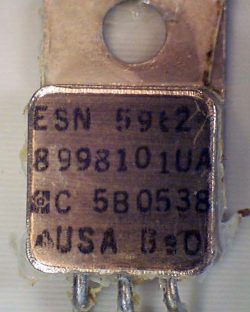
A potentiometer (or pot) is a simple electromechanical transducer. It converts rotary or linear motion from the operator into a change of resistance, and this change is used to control the resistance within a circuit. The pot (also known as a rheostat) is essentially a variable wire wound resistor or a carbon or metal film with a swiper. A potentiometer is an example of a voltage divider consisting of resistors in series. It is commonly used to create a reference voltage, or to get a low voltage signal proportional to the voltage to be measured, and may also be used as a signal attenuator at low frequencies. For direct current and relatively low frequencies, a voltage divider may be sufficiently accurate if made only of resistors.

Kemet T491C155M035AT Tantalum Capacitors

Kemet T491C155M035AT Tantalum Capacitors

Gideon Analytical Laboratories received two surface mount T491C155M035AT Kemet tantalum capacitors with internal resistive shorts. These capacitors have standard capacitance tolerances of ±10% and ±20%, with an operational temperature -55°C to +85°C rated voltage and up to +125°C with voltage derating in applications utilizing recommended series resistance. They have low leakage and are ROHS compliant. The goal was to determine the reason for the failure.

There was no damage tothe external plastic encapsulation of the package to indicate mechanical stress, which would weaken the package integrity. No marks were found by pick and place. The lead frame was normal and provided good flexibility and strain relief as well as package adhesion as it entered the encapsulation. The capacitor is pictured at the top left.

IXYS IXGH32N60B Passivation Defect on IGBT

IXYS IXGH32N60B Passivation Defect on IGBT

Gideon Analytical Laboratories performed failure analysis on several IXYS IGBT IXGH32N60B transistors, encased in TO-247 packages. These transistors are 60 amp 600V 2.3 Rds 200W. The concern was that the devices were not functioning as 600V but topped out at 480V in the application.

Displayed in the picture above is a defect near the guard ring. Further analysis revealed there are several metal posts contacting more than likely underlying diffusion for voltage termination. These metal posts seem to be the area of vulnerability. There is a hole in the passivation, which has allowed moisture to ingress the metal. Because of the erratic behavior of the initial BVces measurements (baked out to eliminate moisture), the consistent failure mode of lower BVces associated with the termination structure, and the passivation integrity test demonstrating termination vulnerability leads one to conclude that the problem is an ingress moisture related issue, not an application issue. Good parts had nothing wrong with the passivation and functioned in the application with normal BVces.

Premature Discharge of Ansul IQ-396X Fire Circuitry

Premature Discharge of Ansul IQ-396X Fire Circuitry

Gideon Analytical Laboratories performed failure analysis on one Ansul IQ-396X, which was submitted for possible failure due to an electrical surge. These control units have two intelligent signaling line circuits (SLC), 396 intelligent device capacity (198 intelligent detectors and 198 monitors/control modules), four built-in output circuits, up to 64 internal output circuits/relays on optional modules in the unit, 99 programmable zone output relays, and manual sensitivity adjustment.

The CPU 400 unit was dissembled and the entire board and components were inspected under 40x to look for and evidence of EOS (electrical overstress) that may have affected the operation of the unit. No evidence was found. The power rails +5, +24, and ground were checked to ensure the lines were not shorted via a component failure. None were found. Continuity checks were made along the +5, +24 and the ground. No opens were found.

Tin Whisker Growth in Solder Mask

Tin Whisker Growth in Solder Mask

Gideon Analytical Laboratories received a PCB for failure analysis. The board was identified as having a short from the NET trace to the ground. The short measured about 10 ohms. One area of the board was abraded to reduce the thickness of the black solder mask. The board was received like this and we tried to change the refractive index to optically see through the solder mask. This was unsuccessful. The abraded area produces different optical characteristics, which prevent clear optical vision. Radiography did not work at all because the beam intensity attenuates and washes out any slivers traces that maybe there and works in principle by a density difference from the surrounding materials. Acoustic (sound waves, CSAM) microscopy did not work because either there are too many interfaces or the sliver may be too fine or the location is known in the material’s matrix.

Large Electrolytic Capacitor

Large Electrolytic Capacitor

Gideon Analytical Laboratories received an Aerovox Z26P6045M21 45uF 600V for failure analysis. No data was given on the capacitor. The capacitor was tested and found open. It did not take a charge when a voltage was applied. The capacitor was also under gas pressure and this gas was carbon dioxide. The top portion of the capacitor after it was removed showed a phenolic insulator used for the registration of the terminal leads.

Organic Analysis on Metalized Substrates

Organic Analysis on Metalized Substrates

Gideon Analytical Laboratories performed failure analysis on a cold rolled steel plate that was received with what looked like tape prints, fingerprints, and black oil which all appear to interfere with the plating process.

Using one microliter of methylene chloride (ACS HPLC Grade) the surface of the cold rolled steel was collected in a glass vial. A portion was then evaporate onto a KCL wafer and analyzed on an FTIR to give spectra in the top picture. All the spectra compared showed aliphatic hydrocarbon oil in the 2900 cm-1 region with a small absorption of ester and acid component. The ester/acid material adheres to the steel surface and has been hydrated with an inorganic material (more than likely the iron in the steel).

AC Capacitor Failure

AC Capacitor Failure

Gideon Analytical Laboratories performed failure analysis on ten failed microwave AC capacitors used in microwave applications. The capacitor used as a doubler failed in the circuit by shorting.

The capacitors were Samwha vintage 2100VAC .65uF with 3 percent tolerance with a maximum temperature rating of 85°C. All the capacitors were tested for shorts or opens. The resistance of the integrated resistor (internal and immersed in the dielectric fluid) was measured also. None of the integrated resistors failed. They all varied from 9.75-M ohms to 10.85M ohms. Many of the capacitors saw considerable heat. This was evident by the bulging deformed metal can housing. When several of these capacitors were taken apart the dielectric fluid burst out under pressure. In order for such pressure to exist internally, the dielectric fluid has broken down forming a gas, the volume of the byproducts is larger than the initial conditions or another gas was produced by another means.