Failure analysis finds out why an electronic part or assembly stopped working. The goal is a root cause that you can use to make a corrective action, for example a change to a design, a process or a supplier.
This category collects our case studies on many kinds of electronic parts. They include capacitors, diodes, transistors, integrated circuits, optocouplers and complete printed circuit boards. The common failure causes are electrical overstress (EOS), mechanical stress and cracking, moisture, contamination and process defects. In one case, a short on a board was caused by tin whiskers inside the solder mask. In another, cracks in ceramic capacitors came from PCB flexing.
A typical job starts with a review of the failure history and electrical tests on the failed parts, often compared with good parts. The lab then uses non-destructive methods such as X-ray radiography. Destructive steps follow, such as cross-sectioning and decapsulation, with optical and scanning electron microscopy. Chemical methods such as FTIR help to identify contamination.
To start a project, request a quote.
Tin Whisker Growth in Solder Mask
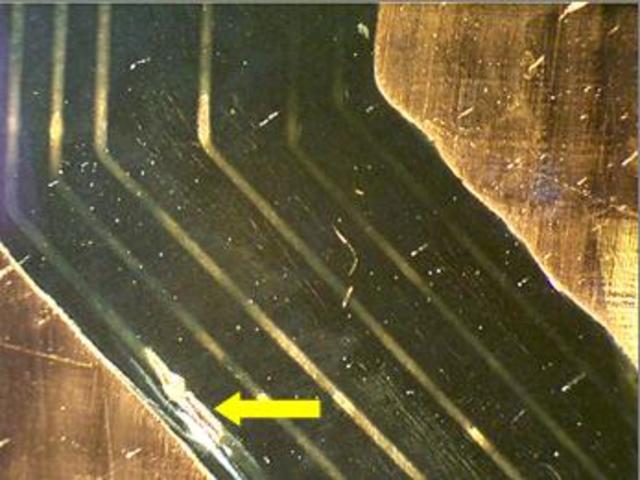
Gideon Analytical Laboratories received a PCB for failure analysis. The board was identified as having a short from the NET trace to the …
March 8, 2002Large Electrolytic Capacitor
Gideon Analytical Laboratories received an Aerovox Z26P6045M21 45uF 600V for failure analysis. No data was given on the capacitor. The …
January 25, 2002Organic Analysis on Metalized Substrates
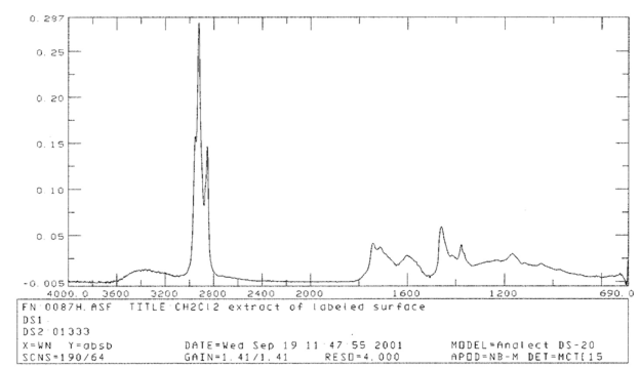
Gideon Analytical Laboratories performed failure analysis on a cold rolled steel plate that was received with what looked like tape prints, …
September 24, 2001AC Capacitor Failure
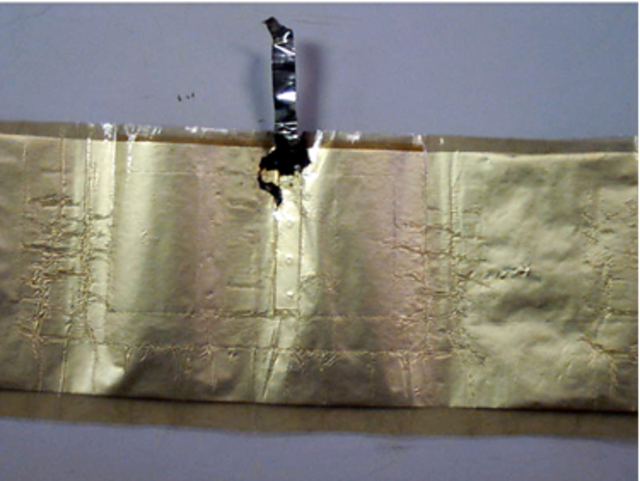
Gideon Analytical Laboratories performed failure analysis on ten failed microwave AC capacitors used in microwave applications. The …
April 17, 2001