Failure analysis finds out why an electronic part or assembly stopped working. The goal is a root cause that you can use to make a corrective action, for example a change to a design, a process or a supplier.
This category collects our case studies on many kinds of electronic parts. They include capacitors, diodes, transistors, integrated circuits, optocouplers and complete printed circuit boards. The common failure causes are electrical overstress (EOS), mechanical stress and cracking, moisture, contamination and process defects. In one case, a short on a board was caused by tin whiskers inside the solder mask. In another, cracks in ceramic capacitors came from PCB flexing.
A typical job starts with a review of the failure history and electrical tests on the failed parts, often compared with good parts. The lab then uses non-destructive methods such as X-ray radiography. Destructive steps follow, such as cross-sectioning and decapsulation, with optical and scanning electron microscopy. Chemical methods such as FTIR help to identify contamination.
To start a project, request a quote.
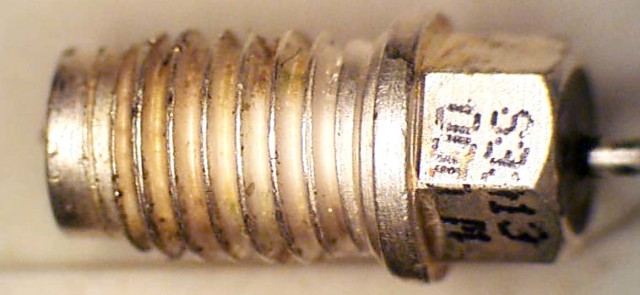
JanTXV1N821 Diode
Gideon Analytical Laboratories received a JanTXV1N821 Zener diode for electronic failure analysis. A diode is a two-terminal electronic …
October 22, 2014Compound Gate Drivers
Gideon Analytical Laboratories received four National LM5111-1m dual 5A compound gate drivers. There were two bad devices and two good ones …
July 2, 2014Linear Microcircuit Modular Hybrid
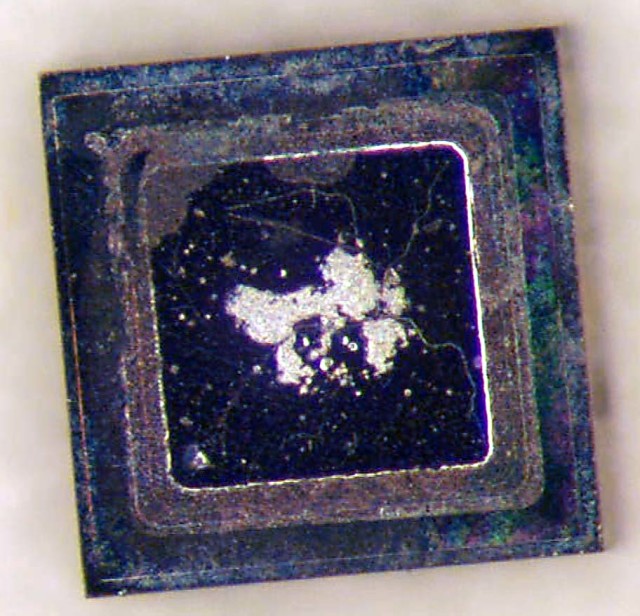
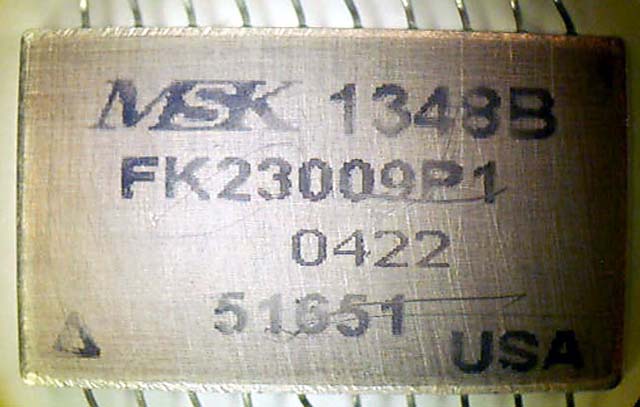
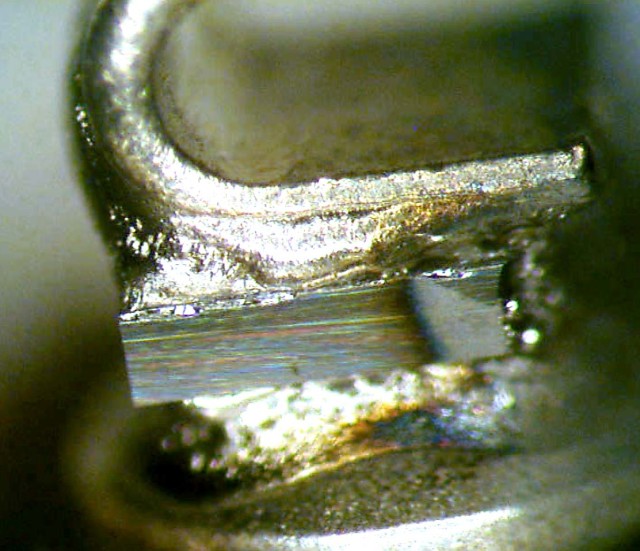
Gideon Analytical Laboratories received one linear microcircuit modular hybrid FK23009 for electronic failure analysis. A hybrid integrated …
April 10, 2014Failed 1210 MLCCs
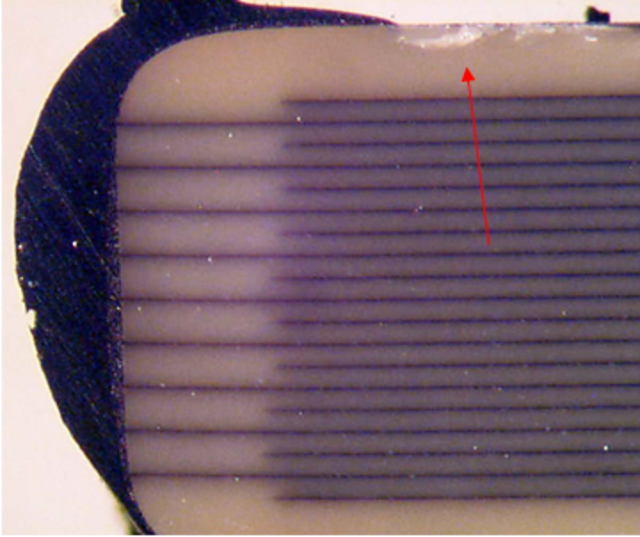
Gideon Analytical Laboratories received three 1210 Multi-Layer Ceramic Capacitors (MLCC) for analysis. Multilayer ceramic capacitors are …
March 31, 2014Microsemi DZ771215A diode
Gideon Analytical Laboratories received a failed Microsemi DZ771215A 10 watt diode for failure analysis. Two working devices were provided …
March 31, 2014Thermal Damage to MLCC
Gideon Analytical Laboratories received one MLCC on a DC input noise filter PCB on which to perform failure analysis. MLCCs (Multi-Layered …
March 31, 2014LM5111-1M Dual 5A Compound Gate Drivers
" Gideon Analytical Laboratories received four National Semiconductor LM5111-1M dual 5A compound gate drivers. A gate driver is a power …
March 28, 2014MLCC PCB Flexing
Gideon Analytical Laboratories received one MLCC (Multi-Layer Ceramic Capacitor) with a reported short. Ceramic capacitors are the most …
March 28, 2014Spectrum Pi Filters
Gideon Analytical Laboratories received two Spectrum Control Pi filters, a failed Pi filter, and a good Pi filter from the same vintage as …
March 28, 2014144A9284P4 Resistors
Gideon Analytical Laboratories received several GE Aviation 144A9284P4 carbon film resistors for failure analysis evaluation. A resistor is …
March 27, 2014Destructive Physical Analysis of Pi Filters
Gideon Analytical Laboratories was asked specifically to perform Destructive Physical Analysis (DPA) on Spectrum Control and Tusonix Pi …
July 1, 2013Fairchild 740L6000 Internal Contamination
Gideon Analytical Laboratories received four Fairchild 74OL6000 field failed Optocouplers along with three good (virgin green dot) devices …
July 1, 2013